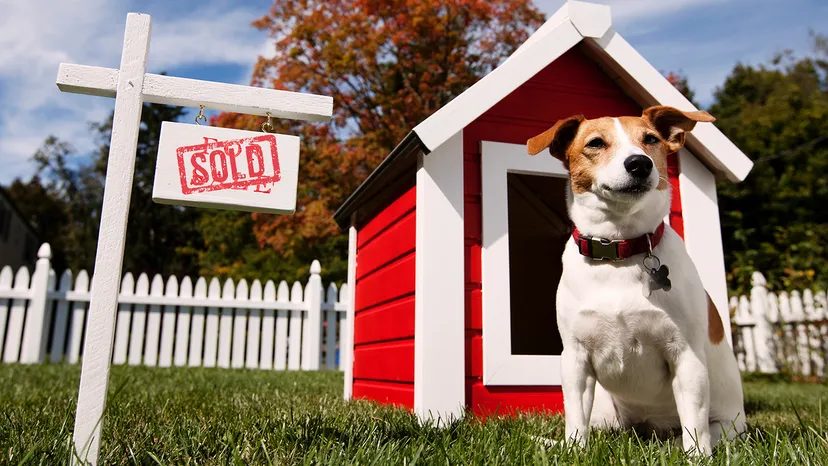
Millennials have a reputation for being difficult to pin down. They are the largest generation in U.S. history, yet their housing patterns defy standard generational narratives. While homeownership rates remain low compared to previous decades, 31 percent of millennials owned homes in 2015. That is a significant number of houses.
But the reason behind the purchase is what catches people off guard.
It isn’t about marriage. It isn’t about preparing for a child. For a growing segment of buyers aged 18 to 39, the primary motivator is their dog.
A late 2017 survey by Harris Poll and SunTrust Mortgage revealed a striking trend. Thirty-three percent of millennial first-time homebuyers cited their pets as the main reason for purchasing their property. This shift in housing priorities is reshaping what buyers look for in a listing. It is not just about square footage anymore. It is about fenced yards, off-leash freedom, and space for animals that are now considered full family members.
The Yard is the Main Attraction
Shannon Quinn Lewis, 37, and her husband embody this new buying logic. They are both avid volunteers and fosters with Angels Among Us Pet Rescue in Atlanta. When it came time to move, they did not look at school districts or commute times first. They looked for space for their animals.
“Our dogs were the only reason we moved!” Lewis said. “Living downtown didn’t provide them the space we felt they deserved.”
Lewis owns ten dogs. At times, she fosters three more. The transition was drastic. The group moved from a downtown apartment with a mere 250-square-foot yard to a home on a half-acre lot in the northern suburbs.
“We would take them to parks and trails, but we wanted a yard of their very own that they could run off leash and really enjoy,” Lewis explained.
The change in living conditions is immediate for the animals. A half-acre greenspace allows Lewis and her husband to spend extended time outdoors with all ten of their dogs. It is not a luxury. It is a necessity for animals that require significant room to run and play.
Designing for Canine Needs
This preference is not unique to Lewis. Real estate agents are seeing a surge in listings that prioritize canine comfort over traditional human-centric features.
Stacy Slocum, a real estate agent with Georgian Home Realty, recently helped a client named Amber find a home tailored specifically for her bull terriers. Amber is in her thirties. Her requirements were strict.
“Her top priorities were a large private, fenced backyard and easy accessibility to that yard from inside,” Slocum said.
Amber’s bull terriers are large dogs. One has hip issues. Steps were a non-negotiable factor in the search. The client was willing to look outside her preferred neighborhood to find a property that met these physical needs.
Accessibility matters. A home with a yard is useless if getting to it involves climbing stairs or navigating tight spaces. Slocum found Amber a four-bedroom ranch house. It featured a huge yard and a privacy fence. The layout allowed for seamless indoor-outdoor flow.
The Master Suite for the Dog
The dedication to pet-centric living goes beyond the backyard. It extends into the interior design and room allocation.
Amber wanted a space where she could entertain friends without confining her dogs to a small, isolated area. The solution required careful planning. Slocum spent six weeks searching to find the right property.
When she found it, the arrangement was unconventional for a standard human-centric home. Amber gave her dogs the master bedroom.
“They have the largest bedroom in the house,” Slocum noted. “They have French doors that open up to the huge backyard.”
This setup allows the dogs to roam freely between the indoors and outdoors. It creates a large play area without the need for constant supervision in a separate pen. It is a practical solution for owners who want their pets involved in daily family life rather than segregated from it.
A Generational Shift in Pet Ownership
This behavior aligns with broader data on millennial pet ownership. A late 2016 study by Mintel found that seven in ten male millennials and three in five females own dogs. The numbers are even higher for older millennials, aged 30 to 39. Seventy-five percent of this demographic have dogs.
They are also willing to spend money on them. In 2016, Americans spent $66.75 billion on pet food, leashes, collars, and veterinary care. Millennials are not holding back. Seventy-six percent said they would happily splurge on expensive treats and custom beds.
Buying a house with a yard fits into this spending pattern. It is an investment in the pet’s quality of life. For these buyers, the home is an extension of the care they already provide.
Health Benefits for the Whole Family
The impact of this lifestyle extends beyond the pets. There are tangible health benefits for human residents as well.
Several studies indicate that children growing up in homes with dogs are less likely to develop allergies or become obese. Researchers attribute this to increased exposure to dogs. This interaction boosts levels of “gut microbes” that help prevent these conditions.
A home with a large yard encourages more outdoor time. It brings the family closer to nature and to the animals they love. It changes how people live inside their homes.
The trend suggests that for many millennials, a house is not just a roof over their heads. It is a facility for their dogs. And for those dogs, it is everything.
The market is adapting. Listings with fenced yards and single-story layouts are in higher demand. Agents are learning to highlight these features differently. Buyers are looking for privacy fences that keep dogs secure. They want French doors that open directly to the grass.
It is a small shift in real estate terminology. But it reflects a larger change in how people value their homes. The yard is no longer just a decoration. It is the main event.