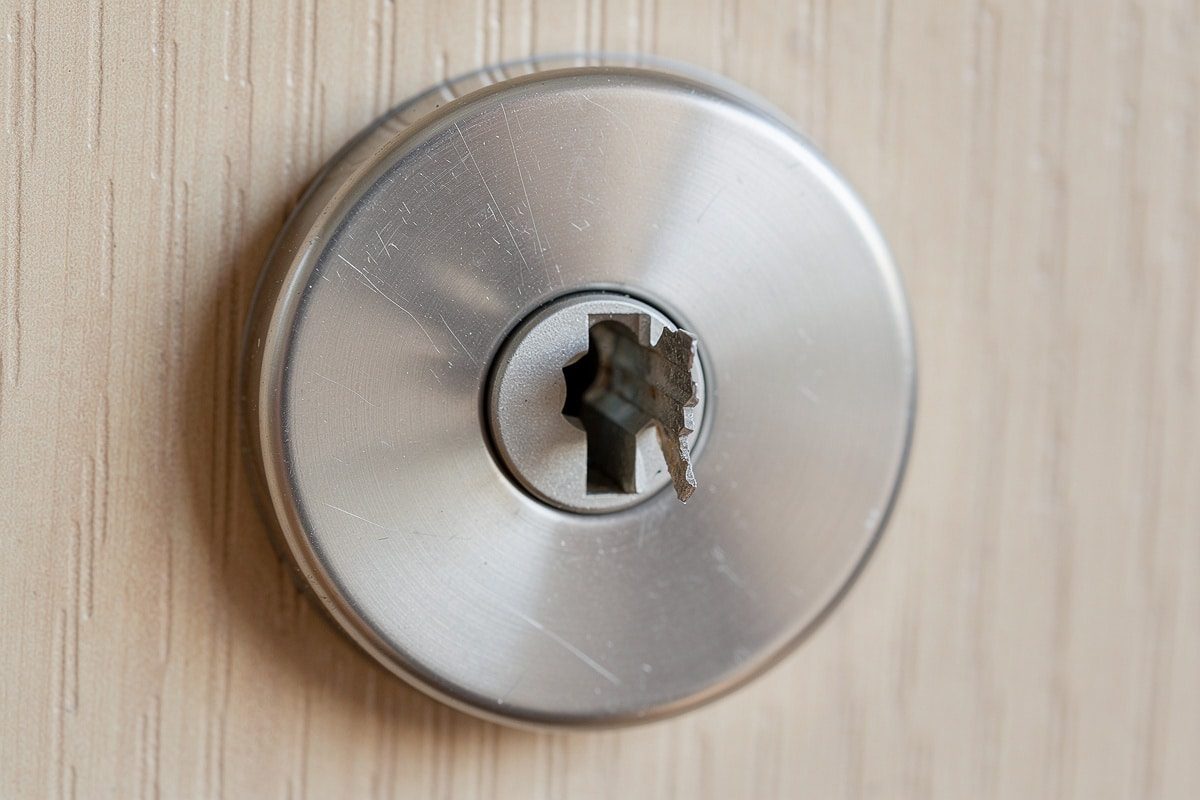
It is February 17, 2026. Winter has its claws deep in the ground. You have just finished a long day and want to get inside where it is warm. Then the nightmare starts. You try the key one too many times. The lock is stiff from the cold. Snap.
That sharp sound is the metal giving up. You are left holding a useless shard of steel. The rest of the key is buried deep inside the cylinder. Before you call an emergency locksmith who will charge a fortune or start kicking the door down, stop. There is a method. It is gentle. It is almost surgical. And the tools might already be in your bathroom drawer.
Don’t make it worse: First steps for a jammed lock
Panic is your enemy here. Adrenaline hits your system. You want to fix it now. But rushing leads to disaster. If you fumble with the broken piece, you might push it further in. You will turn a minor annoyance into a full lock replacement.
Why forcing the key is the worst idea
You might see the small nub of the key still sticking out. Your instinct screams to stick another object in there. Maybe a paperclip. Maybe the tip of a knife. Do not do this.
This is the fatal error.
If you shove a foreign object in there, you will likely push the broken fragment deeper into the barrel. Once it passes the point where you can reach it, extraction becomes nearly impossible for an amateur. You could also damage the delicate pins inside the cylinder. Keep your hands off the mechanism until you have a plan.
Check the position of the cylinder
Before you run for tools, look closely. Did the key break when the lock was straight up and down (resting position)? Or did it snap while you were turning it?
This detail matters.
If the cylinder is in the neutral position, the pins are aligned. The broken piece might slide out easily if it is not jammed too deep. If the key broke while the mechanism was halfway turned, the metal is held tight by the rotated cam. This is called the “engaged” position. Extraction here is much harder. Knowing this helps you gauge your odds of success.
The winning duo: Everyday items to save you
Forget expensive professional tools for a moment. Most broken key extractions can be handled with two common household items. It is about precision combined with friction reduction.
The tweezers: Your surgical instrument
The star of this show is the tweezers. But not just any pair. You need metal ones. They must be rigid. Plastic tweezers are too floppy. They will bend before they grip. Look for flat or serrated tips.
The fineness of the tips allows you to slide them on either side of the key fragment. You avoid touching the cylinder walls. This precision tool is what lets you grab that millimeter of metal that is still visible.
Dry lubricant: The secret ingredient
Tweezers alone might struggle if the key is stuck tight. You need to reduce friction. Do not use cooking oil. Do not use thick grease. These will gum up the mechanism over time. They attract dust and turn into a sticky paste.
You need dry lubricant.
Look for products based on graphite or PTFE (Teflon). They come in spray or powder form. This creates a microscopic slippery film. It does not leave a sticky residue. The broken key piece will slide along the walls of the cylinder with minimal resistance. This makes the tweezers job significantly easier.
Prepping the Lock: Lube and Let Sit
Gather your tools. Now breathe. This isn’t a demolition job. It’s delicate work. Rush it, and you lose.
Start with dry lubricant. Spray it directly into the keyhole around the broken fragment. Be generous, but don’t flood the interior if using a liquid spray. You want capillary action to pull the product along the key’s stem. Let it sit. One to two minutes. Give the lube time to seep into every tiny gap. This reduces friction between the brass key and the steel cylinder walls.
Extracting the Broken Fragment: Precision Over Power
This is the critical moment. Use tweezers. A flashlight illuminates the interior. Spot the exposed end of the key. Slide the tweezers gently on both sides of the shard.
Grip firmly. Pull straight back. Slowly.
Do not lever the piece up or down. You will lose your grip or push the fragment deeper in. If the shard moves even a millimeter, you’ve won. Keep pulling. Inch by inch. Until it’s out far enough to grab with fingers or a sturdier plier. Patience is your only real tool here.
Plan B: When Tweezers Fail
Sometimes the piece won’t budge. It’s jammed deep or held by a stubborn pin. Before you call it quits, try two more methods.
The Magnet Method
This only works if the key is steel. Many keys are brass or nickel, which aren’t magnetic. If yours is steel, use a strong neodymium magnet. Hold it against the lock hole. Pull gently. The magnet may drag the shard out.
Extraction Kits
If the magnet fails, buy a key extraction kit. They cost a few euros. These kits contain thin rods with tiny hooks. Slide the tool along the key’s grooves (the toothed side). Turn slightly to catch a notch on the key. Pull the assembly out. It’s tedious. It works.
When to Stop and Call a Pro
Know when to fold. If you’ve tried everything and the key hasn’t moved, stop. If you feel yourself damaging the cylinder entrance, stop.
Pushing further risks breaking the internal mechanism permanently. You’ll end up replacing the whole lock. Maybe the door handle too. A locksmith costs money. But a replaced door frame costs more. Don’t turn a simple extraction into a major renovation project.
Preventing Future Breakages: Maintenance Matters
Keys rarely break by accident. It’s usually slow metal fatigue. Or a dry, sticky lock. Prevent it.
Lubricate Regularly
Treat your lock like an engine. Twice a year. Before winter. Before summer. Inject graphite lubricant or silicone spray designed for locks. This lets pins move freely. Less friction means less torque on the key. Less torque means less risk of snapping.
Inspect for Fatigue
Keys warn you before they break. Look at the base of the key, just before the bow. Watch for fine white lines. Tiny fissures. These signal material fatigue. The metal is weak. It will snap under the next twist.
Bent keys shouldn’t be straightened by hand. The structure is compromised. If you see signs of wear, cut your losses. Get a duplicate. Throw the original away.
You survived the breakage. But don’t ignore the signs. If your locks are old, your keys are tired, and your maintenance routine is zero, consider upgrading. A keyed entry is fine. A keyless smart lock might save you more headaches in the long run.