You’re out in the garden. The sun is shining. Then you see it. The leaves are turning black. Or worse, the bottom of your tomatoes is rotting before they even ripen. It’s a specific kind of panic. You’ve spent months watering, weeding, and hoping for the best. Now, decay.
Most gardeners reach for the fungicide. Or a complex nitrogen blend. They think this is a chemical problem requiring a chemical solution.
Wrong.
There is a cure sitting in your kitchen right now. It’s not exotic. It’s not expensive. It’s not even particularly healthy in large quantities. But it works.
The Two Culprits: Mildew and Blossom End Rot
Let’s be clear about what you are fighting. The symptoms look different, but they require different attention.
Late Blight (Mildew)
This is the fungus that wrecks tomato plants. It starts as dark spots on the leaves. The stems turn brown. The fruit rots on the vine. It spreads fast. Rain helps it. Humidity feeds it. If you ignore it, you lose the crop.
Blossom End Rot
This isn’t a disease. It’s a calcium issue. The bottom of the fruit turns black and mushy. The plant is fine. The leaves are green. But the fruit? It’s dead. It happens because the soil lacks available calcium. Or the plant can’t absorb it. Uneven watering is usually to blame.
The Unlikely Solution: Baking Soda
You’ve probably been told that baking soda raises soil pH. And you’re right. You should not dump cups of it into your garden bed. That will burn your plants.
But there is a different way.
A spray.
The active ingredient is sodium bicarbonate. It changes the surface pH of the leaves. Fungi hate basic environments. They thrive in acidic ones. By spraying the leaves, you make the surface inhospitable for the spores.
For blossom end rot? It’s less direct. But some gardeners find that the sodium helps stabilize the cell walls during growth. It’s not a calcium supplement. It’s a defense mechanism.
How to Make the Spray
Do not mix this randomly. You need balance. Too much soda will scorch the leaves. Too little does nothing.
Ingredients:
– 1 tablespoon baking soda
– 1 teaspoon mild liquid soap (dish soap works, but be careful)
– 1 gallon of water
Instructions:
1. Fill a spray bottle with water.
2. Add the baking soda.
3. Add the soap. The soap acts as a surfactant. It helps the mixture stick to the leaves.
4. Shake gently. Do not create foam.
5. Spray the undersides of the leaves. That’s where the fungus hides.
When to Apply
Timing matters.
Spray in the morning. The sun will dry the leaves. Wet leaves at night invite more fungus.
Spray after rain. The rain washes away the protective layer.
Do not spray in the heat of midday. The sun will cook the solution on the leaves. You’ll burn them.
Why This Works Better Than You Think
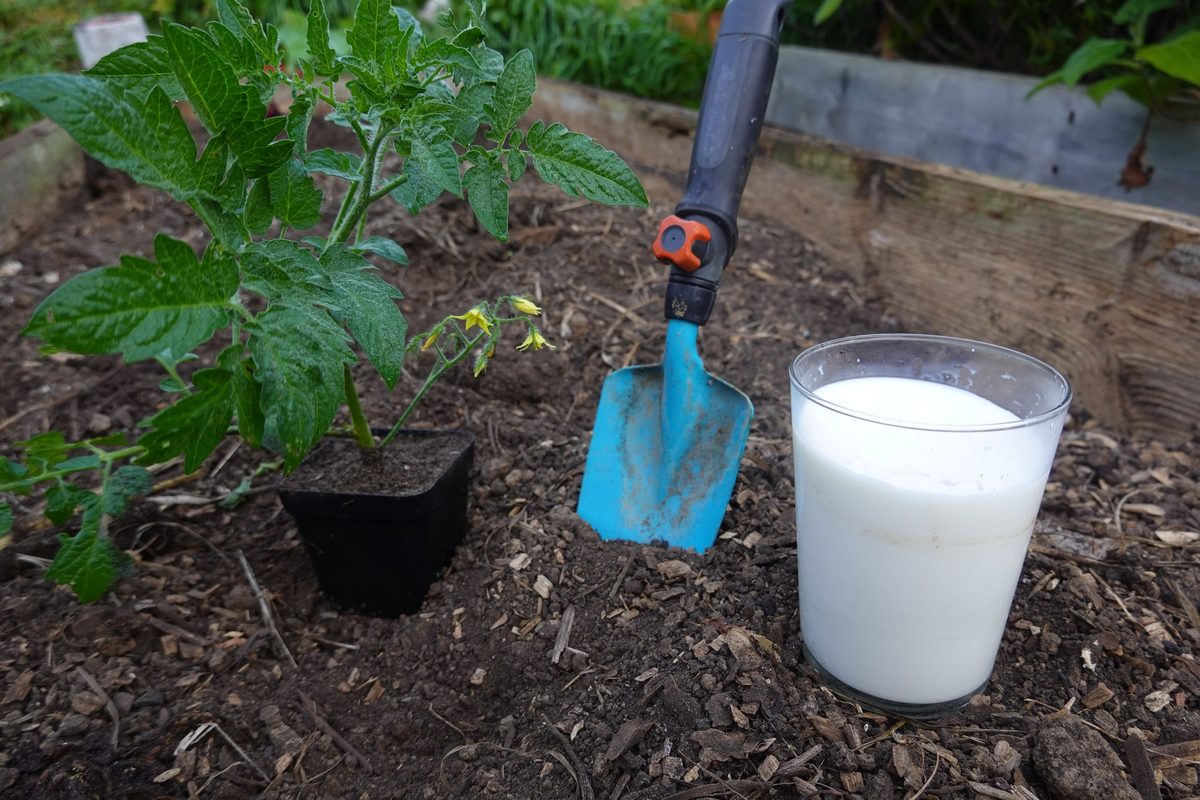
It sounds absurd. But using a carton of milk in your garden can drastically change the health of your tomatoes this season. If you’ve never tried it, you might be throwing away a powerful, natural defense against the two most common tomato killers.
The Threat: Late Blight and Blossom End Rot
Tomato plants are fragile. They face two distinct enemies that often arrive without warning.
Late Blight (Phytophthora infestans )
This fungal disease is the reason gardeners lose entire crops in days. It targets leaves, stems, and fruit. You’ll see oily, brown patches that quickly turn the whole plant into mush. It thrives in hot, humid weather with poor air circulation and overhead watering. Once it sets in, it is nearly impossible to stop. Prevention is the only real defense.
Blossom End Rot
This is a physiological disorder, not an infection. It manifests as a dark, sunken spot at the bottom of the fruit. The fruit rots before it matures. The cause is a calcium deficiency in the plant. This usually happens due to irregular watering, rapid growth, or excess nitrogen. The plant simply cannot absorb the calcium it needs from the soil.
The Unexpected Remedy: Milk
Whole or skim milk. Unflavored and unsweetened. That’s it.
Milk addresses both problems simultaneously. It acts as a fungicide against blight and a calcium supplement to stop blossom end rot. It is cheaper than copper-based sprays and far less toxic to the soil.
Why It Works Against Blight
Milk contains proteins and enzymes. When these compounds hit sunlight, they produce active oxygen. This oxygen is toxic to blight spores. It stops them from developing and spreading. Additionally, the milk dries into a thin film on the leaves. This creates a physical barrier that prevents spores from landing and germinating.
Why It Stops Blossom End Rot
Since blossom end rot is caused by a lack of available calcium, spraying milk delivers this mineral directly to the plant surface. The plant can absorb it through the leaves faster than it can pull it from stressed roots. It bypasses the absorption issues caused by drought or soil imbalance.
How to Apply Milk to Your Garden
The application is straightforward. You don’t need complex equipment. Just a spray bottle or a watering can.
For Late Blight Prevention
- Mix the solution: Combine one part milk with two to three parts water. For example, one liter of milk to two liters of water.
- Spray weekly: Apply the mixture to the leaves and stems once a week. Morning is best.
- Reapply after rain: Heavy rain washes the protective layer away. Spray again soon after it clears.
For Blossom End Rot
Use the same dilution. Focus your spray on the developing fruits. You can also water the soil at the base of the plant to enrich the root zone directly. Consistency is key. Start early, before the first fruit sets.
Practical Tips
- Use room temperature milk. Cold milk shocks the plant.
- Avoid midday sun. Spraying in peak heat can cause leaf burn due to the magnifying effect of the liquid droplets.
- Skip additives. Do not use chocolate or flavored milk. Stick to plain dairy.
- Organic isn’t mandatory. Regular milk works fine, but avoiding additives is wise.
Why Gardeners Are Switching to Milk
This isn’t a new trend. It’s a time-tested method. Home gardeners have reported significant reductions in crop loss using this technique. It doesn’t cure every disease. It is not a miracle cure for existing, severe infections. But as a preventive measure, it is highly effective.
Chemical fungicides can harm beneficial insects and degrade soil quality over time. Milk breaks down naturally. It adds organic matter to the soil as it washes off the leaves. It is a low-risk, high-reward strategy for the DIY homeowner.
You don’t need a degree in plant pathology to save your tomatoes. You just need to be consistent. Mix the solution. Spray the leaves. Watch the results. The best tools are often the ones already in your fridge. Your plants might just thank you with a bigger harvest.