


Picture this. It was a dark January night. You are sitting at the coffee table with your family. Someone puts down a glass of water. Condensation accumulates at the bottom. After a few hours you will notice. A pale, white ring on the cherry wood. It looks like a glass ghost. Your heart sank. That table is a family heirloom. At least it’s the focal point of the living room.
No need to polish. No need to hire an expensive carpenter. There is a way to solve this problem. Use ingredients you already have in your kitchen. Your approach is gentle. What a surprise! It works by pulling the moisture out of the finish.
Why water rings occur (and why they’re not permanent)
First of all, please calm down. The white mist will not ruin your furniture. This is a cosmetic issue. Dark stains? Those are bad. This means that water has penetrated the fibers. The wood itself rots or swells. But what about the white marks? That’s different.
Moisture is trapped “under” the finishing material. Whether it is wax, varnish or shellac, the seal remains intact. It just can’t escape. It creates a cloudy layer. Heat from a hot mug can do this too. Thermal expansion temporarily reduces the transparency of the seal.
Winter can make the situation even worse. Heated homes. Cold windows. Condensation quickly forms in cold drinks. You spend more time indoors. Spills happen. But before you reach for the steel wool or chemical strippers, stop for a moment.
Aggressive cleaning removes the protective layer. You expose raw wood. Now the next leak causes permanent damage. The purpose is to remove the remaining moisture. Not to scrub it away.
Vinegar and oil repair
It’s a trick. It’s like salad dressing. It works like a chemical rescue. You need two things. White vinegar. And olive oil.
The vinegar is the active agent. It is a weak acid. It helps to dissolve the residue and loosen the trapped water from the finish It is gentle enough not to eat through the varnish when used correctly.
The oil is the vehicle. It has a lubricating effect. It nourishes. It seals the spot after the moisture is gone. Restores shine.
Removal steps
- Stir the solution. Use equal amounts of white vinegar and olive oil. A tablespoon each is enough for a small ring. For larger areas, scale up.
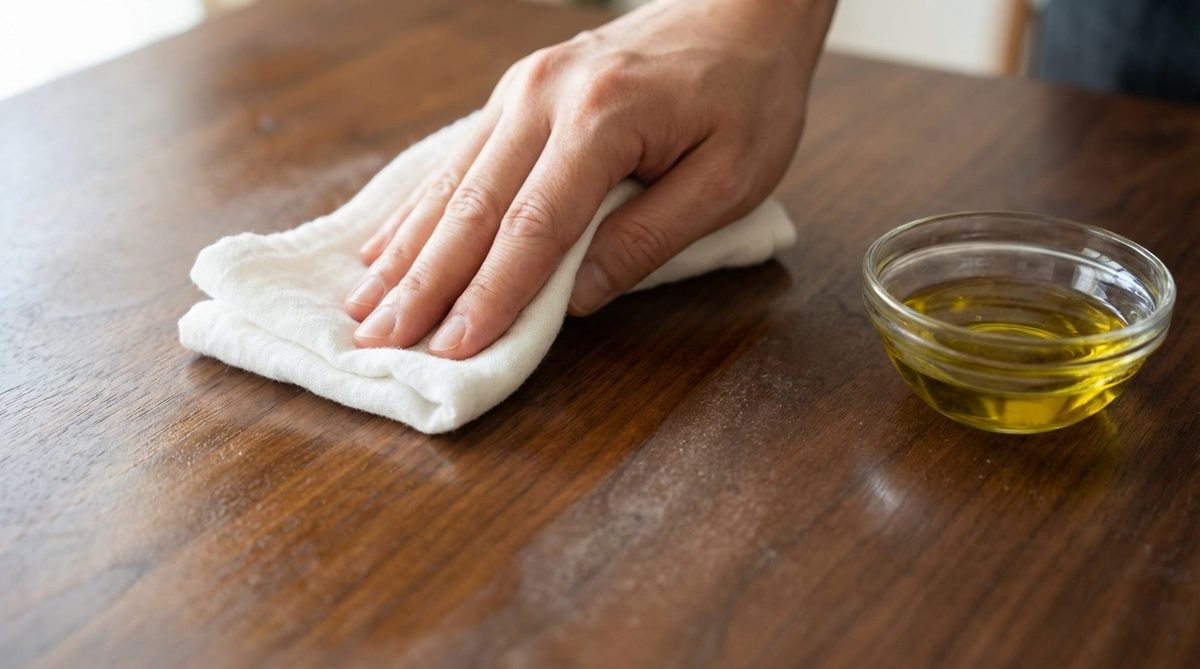
- **Use with care. ** Dip a clean soft cloth into the mixture. Wring it dry. You don’t want to soak the wood. Just wet the cloth.
- **Wipe along the grain. ** Place the fabric on top of the white ring. Wipe gently. Follow the direction of the wood grain. This is important. If you rub the grain of the board, small scratches will remain.
- **See magic. ** The white mist should begin to subside. It might take a minute. Sometimes it takes five. be patient. Vinegar removes moisture.
- **Wipe clean. ** Use a dry part of the fabric. Polish the area. Remove excess oil. You want the wood to feel dry, not sticky.
Why this works with different finishes
This method is very versatile. It works on lacquer. It works on varnish. Works well with wax. But check your finish first. In unsealed wooden tables, this might darken the wood due to the oil Please test in an inconspicuous area.
Vinegar breaks the surface tension. The oil fills the small gaps caused by water evaporation. This is chemistry, not magic. But when the ring disappears, it feels magical.
When to stop
Not all white marks are surface moisture. If the wood feels rough, the finish is cracked If the white part is dented, there is physical damage. This approach does not solve structural problems. Only optical illusions caused by trapped water can be corrected.
If you try this and nothing happens after 10 minutes, the stain may be deeper. Or the finish may be completely compromised. In this case, you may need to strip and refinish. But start here. Most of the white ring is trapped steam.
Prevention is cheaper than repair
Once the ring is gone, protect the table. Use coasters. every time. Glass rings are inevitable. Heat rings are preventable if you use a trivet. But we are human. We get comfortable. we forget.
Consider applying another layer of wax after the repair. Add a sacrificial layer. New water spots will land on the wax, not the finish. Buffing it out is easier than fixing a white ring.
Conclusion
Don’t panic if you see a white ring. Avoid contact with strong chemicals. There is no need to change the furniture. No need to hire help.
V
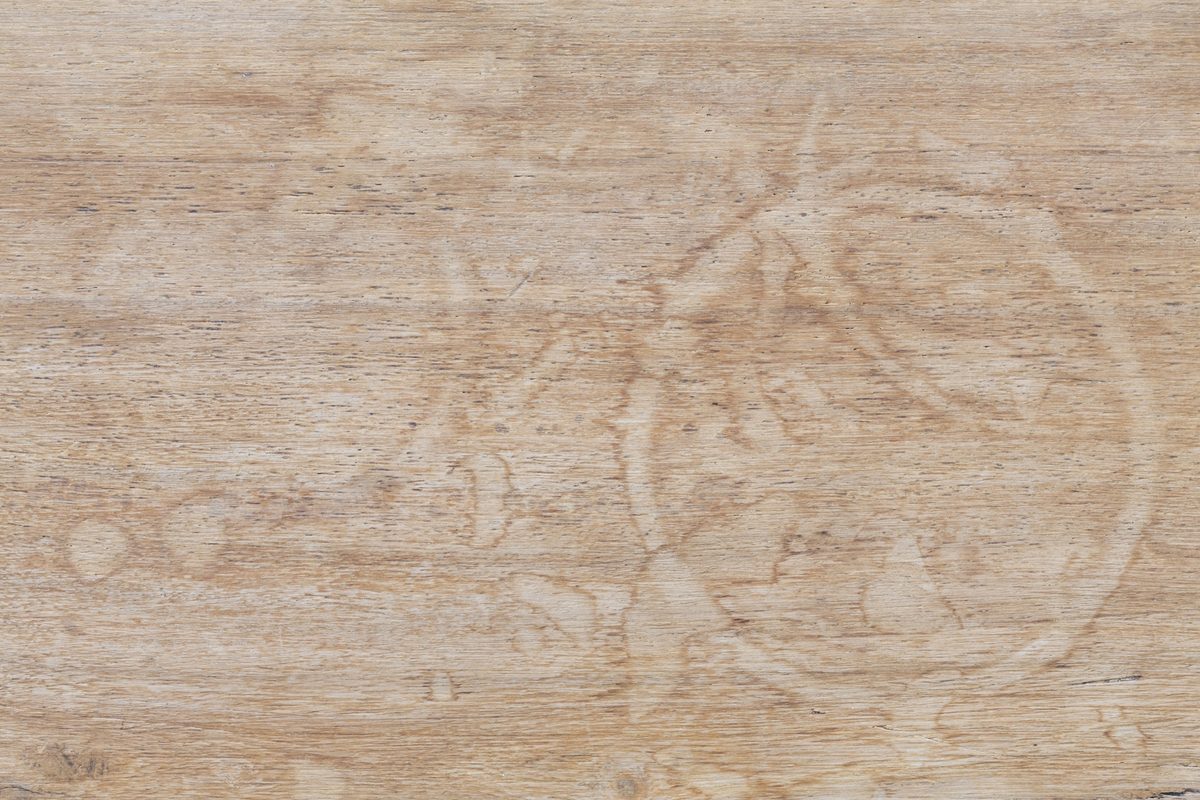

Most people panic when they see a white ring on an antique table. They cling to steel wool. They reach industrial solvents. Stop. White clouding is not permanent damage. It’s just trapped moisture stuck in the finish. You can pull it out without stripping the furniture.
The secret is not a complex chemical reaction. It’s a culinary emulsion. Acids are needed to dissolve mineral deposits and fats to replace the lost oil content of the wood. The answer is already in your pantry.
Materials you already have
No need to drive to the hardware store. Do not use special wood cleaners. This recipe uses two products that you probably already have on hand.
- 50 ml white vinegar (distilled or crystal vinegar is best)
- High quality olive oil 50 ml
You also need two soft, lint-free cloths. Microfiber is ideal. An old clean cotton T-shirt cut into squares will also work.
Mix them together in a bowl. equal parts. No additional measurements are required. Balance makes it work.
Why this combination works
White vinegar is acidic. This acidity acts as a mild degreaser and cleanser. Dissolves water spots and gently unclogs pores to finish. It doesn’t strip the varnish. It just loosens the debris.
Olive oil is a restorative agent. It penetrates the wood fibers. It replaces the water with a nourishing lipid. This restores the wood’s natural moisture. As a result, the surface appears warm again. The gray milky veil disappeared. The rich wood tones are back.
It’s not just about cleaning. It’s restoration.
How to spread the mixture without damaging it
The wood is very delicate. It moves with the moisture. Please be respectful.
Dip a cloth in the mixture. Wring it out until it gets wet and doesn’t drip. You don’t want to soak the wood. Just wet the surface.
Wipe the white ring. Press lightly. Move in the direction of the wood grain. Never go against the grain. Circular motions can leave swirl marks. Make sure you use long, straight strokes.
Watch the ring disappear. This may take 1 minute. Sometimes it takes five. If the stain is old, wait a while. Don’t scratch. Do not use hard tools. Apply again if necessary. Allow the wood to absorb the mixture between passes. The effect of vinegar and oil takes some time.
Once the white haze is gone, switch to the second cloth. This must be dry and clean. Buff the area vigorously. All excess oil and vinegar must be removed. Any residue left behind will attract dust. It also feels sticky. Polish until the surface is smooth and matte.
Why this is better than commercial sprays
Commercially available wood polishes are often based on silicones. They cover the surface. It makes you look instantly shiny. But this glory is only superficial. Dirt collects underneath. It doesn’t nourish the wood.
This vinegar and oil method feeds the material. It revives the grain. Emphasizes the depth of the color. This is an environmentally friendly choice. No volatile organic compounds (VOCs). Does not contain strong chemicals.
You may notice that the treated area looks better than other areas of the table. This is normal. The wood there contains moisture. The surrounding area may be dry. Consider applying a thin layer over the entire piece. This creates a uniform protective barrier. Prevents future water rings. Prevents drying caused by heating in winter.
Sustainable maintenance practices
This is not just a fix. This is a precaution. By regularly adding natural oils to the wood, a hydrophobic layer is formed. This makes it difficult for water droplets to penetrate. The finish stays intact longer.
This is a longer process than spraying or wiping. However, this is more satisfying. You take care of this item. You’re preserving its life.
Wood is a living material. It breathes. It reacts to the environment. It will last a long time if handled carefully. You gain a tool for the future. This is a simple and effective solution if you dare to face water rings.
Keep the ingredients on hand. The next time you get a mark on your glass, you know what to do.


