


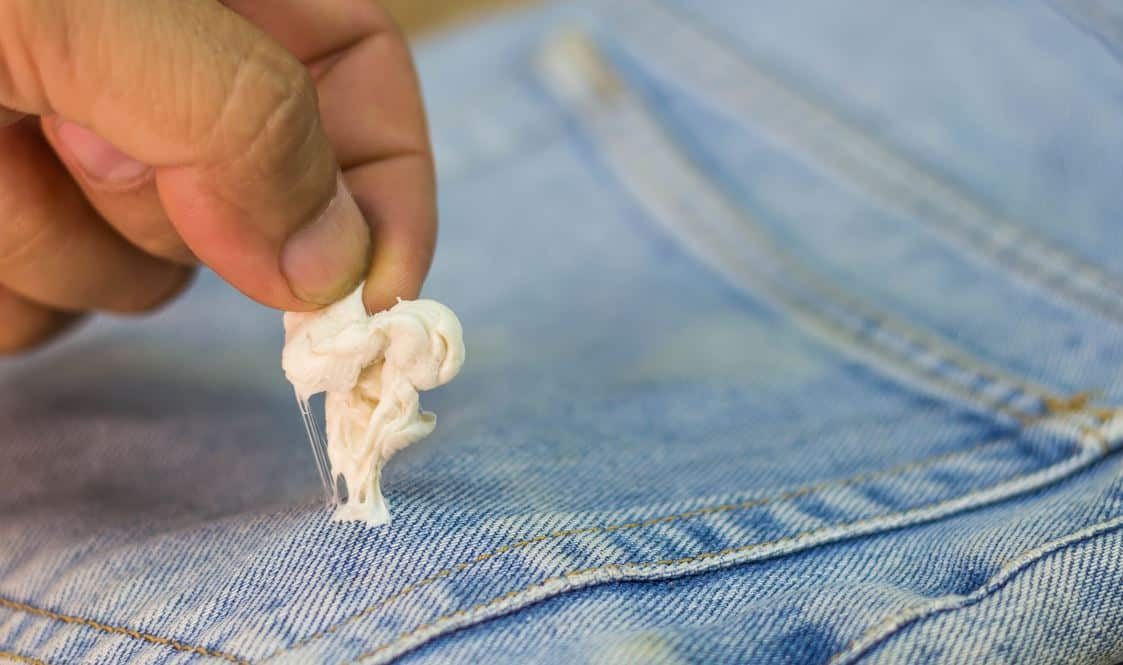
You’re walking down the street. You sit down. The seat is sticky. Classic. It happens to everyone eventually. Your favorite jacket? Ruined? Not necessarily. Panic is the enemy here. Before you throw the garment in the trash, grab some ice or vinegar. These methods actually work. No need to sacrifice your wardrobe over a forgotten wad of sugar.
The Ice Cube Method (Best for Stiff Fabrics)
Ice is your best friend when you are trying to remove gum from clothes without damage. This works especially well on denim, cotton, or synthetic blends.
What you need:
– Ice cubes
– A plastic bag
– A dull butter knife or spoon
How to do it:
1. Place the ice cube directly on the gum. Let it sit for 10-15 minutes.
2. Watch the gum harden. It turns from gooey to brittle.
3. Once solid, use the edge of a spoon or butter knife to gently scrape it off.
4. Do not force it. Work from the edges inward.
“Freezing makes the gum brittle enough to crack and chip away without tearing the fabric.”
The Freezer Bag Trick (For Delicate Items)
If your garment is delicate or too large to hold under an ice cube, use the freezer.
Steps:
– Place the stained area in a zip-top bag.
– Push out the air.
– Put the bag in the freezer for 30 minutes.
– Remove and scrape off the frozen gum.
This method is safer for sweaters or thin synthetics. You avoid direct moisture. You control the temperature.
What If There’s Still Residue?
Scraping rarely gets 100% of the gum. You will likely have a sticky film left behind. Do not use hot water yet. Heat melts the gum. It pushes it deeper into the fibers.
Instead, try:
– Vinegar solution: Mix equal parts white vinegar and warm water. Dab it on the spot.
– Rubbing alcohol: Dampen a cloth and blot the residue. Test on an inconspicuous area first.
These solvents break down the sticky base of the gum without setting the stain.
Why Home Remedies Beat Dry Cleaning
You might think running to the dry cleaner is the only option. It isn’t. Most dry cleaners use harsh chemicals. They cost money. They take days.
Home methods are immediate. They cost pennies. You retain control over the fabric care.
One question remains: why do people never check their seats?
Anyway. Get the gum off. Wash the item normally after. Check the stain before drying. Heat sets stains. Air dry if you are unsure.
The gum is gone. The jacket survives.
The ice cube method for gum removal
Gum doesn’t just stick. It bonds. Trying to peel it off dry is a recipe for tearing fabric or leaving a sticky residue that never quite goes away. You need to change the state of the adhesive. Cold makes rubber brittle. Warmth makes it gooey. You can pick your poison.
Start with ice. It is the simplest tool you likely already have. Put on rubber gloves. Your fingers are sensitive and you do not want to lose a fingernail pulling at hardened plastic. Take a single ice cube. Do not use a bag. The water will melt and soak the fabric, which might cause water spots or mildew if not handled right. Hold the cube directly against the gum. Press hard.
Wait. This is the hard part. You have to wait several minutes. The cold has to penetrate the mass. Once the gum turns into a hard, chalky shard, grab an edge. Peel it off in one quick motion. It should come off cleanly. If it still feels soft, apply more ice.
Freezing the garment
If the spot is small, the ice cube works. If the gum is all over the back of a jacket or a pair of jeans, you need mass. You need a freezer.
Put the clothing item in a sealable plastic bag. Squeeze out the air if you can. This prevents freezer burn and keeps the odor contained. Place the bag in the freezer. Leave it there for a few hours. Overnight is better. The temperature needs to be consistent.
When you pull it out, the gum will be rock hard. Work quickly. The fabric will warm up. The gum will soften. Scrape it off with a dull knife or your fingernail. Once the bulk is gone, the job is not finished. There will be oil and residue left in the fibers.
Lather the area with detergent. Wash it normally. The heat of the wash cycle will help break down any remaining sugars or waxes.
Heat and pressure
Not everyone likes the cold. If you prefer warmth, you can melt the bond. This method is risky for delicate fabrics. Silk? Skip this. Cotton or heavy denim? You are good to go.
Lay the garment flat on the ironing board. You need a buffer. Do not put the iron directly on the gum. It will fuse to the metal plate of your iron and ruin both the iron and the shirt. Use a piece of cardboard or a thick paper towel. Place it over the gum.
Set your iron to medium heat. No steam. Steam adds water, which we do not want right now. Press the iron onto the cardboard. Hold it there. The heat transfers through the paper, softening the gum. It becomes pliable.
Once soft, wipe it away. Use a clean cloth to blot the residue. You might have to repeat this. It is slower than freezing. But it works on older, set-in stains that cold cannot crack.
Removing the oily residue
Scraping off the chunk is only half the battle. The other half is the grease. Gum is made of rubber, sugar, and oils. You have removed the rubber. Now you need to lift the oil.
Alcohol is your friend here. Specifically, isopropyl alcohol at 90% or higher. Standard 70% rubbing alcohol often has too much water to cut through the heavy waxes in modern gum.
Take a microfiber cloth. Soak it. Do not just dampen it. Saturate it. Press it against the stain. Let the alcohol penetrate. Then rub. You are not just wiping. You are dissolving. The sticky film should start to lift.
If the stain persists, add a drop of laundry detergent to the spot. Let it sit. Then wash.
The white vinegar alternative
Alcohol works well. But it can be harsh on some dyes. It can strip color from dark fabrics. If you are

White vinegar for stubborn gum stains
Let’s talk about the cheap stuff that actually works. White vinegar isn’t just for pickling. It is a recognized degreaser and stain lifter that can save your favorite jeans. The goal here is to break down the adhesive bonds of the gum.
Take the stained garment. Grab a bottle of white vinegar. Soak the fabric generously. You need the vinegar to penetrate deep into the fibers. Let it sit. The acidity works against the rubber base of the gum. It loosens the grip. Once the chemical reaction has done its job, the residue should lift away with minimal effort.
Dish soap for deep cleaning
If vinegar feels too mild, go for the heavy artillery: concentrated dish soap. This method relies on surfactants to lift grease and sticky residue simultaneously.
Pour the concentrated liquid directly onto the stain. Use a hard-bristled brush. Scrub the area for a few minutes. You are forcing the soap into the weave of the fabric. It coats every sticky bit.
After scrubbing, use the tip of a knife to carefully lift the gum off. Be gentle so you don’t damage the threads. Check the fabric. If it looks clean, throw it in the wash. Done.
Acetone nail polish remover
Do you keep nail polish remover on hand? Acetone is a powerful solvent. It can dissolve synthetic polymers found in chewing gum. Use it with caution. Test an inconspicuous area first to ensure the fabric color won’t bleed.
Take a piece of paper towel or a cotton pad. Saturate it with acetone. Press it firmly against the gum stain. Wait. Let the solvent work. The gum will begin to soften and dissolve upon contact.
Once the bulk of the gum is gone, wash the item in the machine. This removes any lingering acetone traces and prevents skin irritation later.
Olive oil for shoe soles
Sometimes the gum doesn’t end up on clothes. It ends up on the bottom of your sneakers. Walking on a sticky patch is a universal frustration.
Grab the olive oil from your kitchen. Apply it generously to the affected area of the sole. Rub it in. The oil breaks down the stickiness of the gum. It acts as a lubricant.
Wipe it away with an absorbent paper towel. The gum should come off with the oil. Repeat if necessary. No harsh chemicals needed. Just kitchen staples and a little elbow grease.


