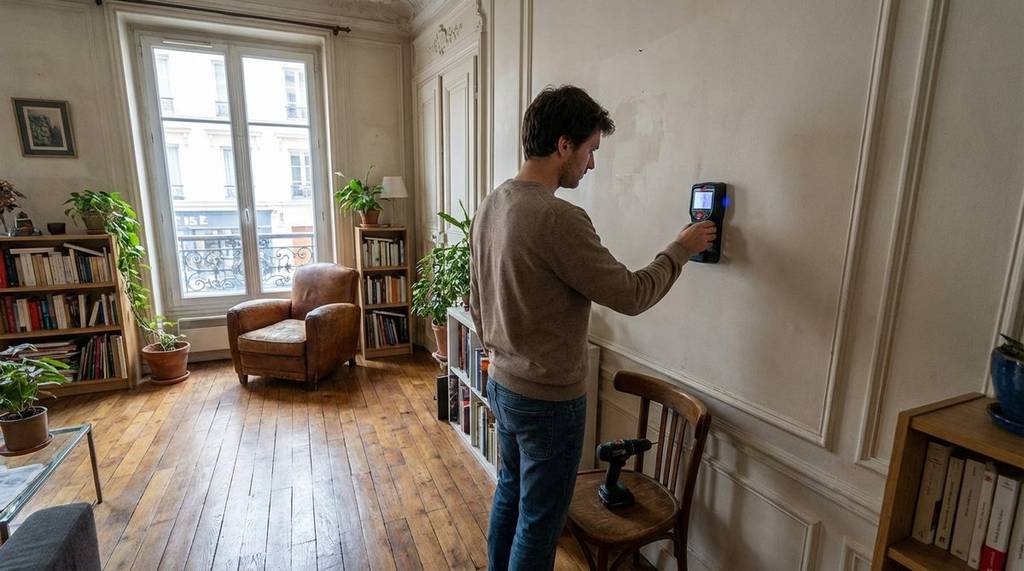
Spring hits and suddenly you want to hang that floating shelf you’ve been eyeing. It seems simple. Pick up a drill. Make a hole. Hang the shelf. Done.
But there is a trap.
Behind that drywall, you don’t just have air. You have copper. You have PVC pipes. You have live electrical wires carrying 120 volts of potential disaster. Hammering or drilling blindly into a stud wall is a gamble you shouldn’t take. One slip and your weekend project turns into an emergency call to the electrician.
I used to treat wall penetration like a lottery ticket. Bad luck meant popping a water line or slicing a live cable. The smell of burning insulation is not something you want to smell during your DIY renovation. It changes the tone of the room instantly.
The fear of hitting something hidden forced a change in my routine. I stopped guessing. I started looking for a tool that could see through the drywall. Not a guesswork stud finder. A real scanner.
Why Blind Drilling is a Dangerous Gamble
Most homeowners underestimate what’s inside a cavity. It’s not just empty space.
- Electrical wiring: Often run vertically through studs.
- Plumbing pipes: Copper, PEX, or galvanized steel.
- Metal studs: In older homes or specific constructions.
- Insulation: Fiberglass or foam, which can hide voids.
When a drill bit hits a metal stud, it screeches. You stop. But wires? They’re often wrapped in plastic or buried deep. A standard stud finder only detects density changes. It won’t tell you if there’s a live wire three inches away.
I’ve had close calls. The drill bit shudders. The machine hums differently. But by then, it’s too late. You’ve pierced the sheetrock. Now you have to patch it. Or worse, turn off the main breaker and tear out a section of the wall to fix the damage.
That’s why I stopped relying on instinct. Instinct is expensive.
The Pocket-Sized Radar That Changed My Workflow
I found a compact device on Amazon. It’s small. Fits in a tool belt. But it’s effectively a radar for your walls.
This isn’t a toy. It’s a professional-grade scanner designed to identify hidden objects. Non-magnetic and magnetic. AC voltage and metal.
Here is why it works where guesswork fails:
- Deep Scan Mode: It penetrates deeper than cheap plastic detectors. You get readings on nails, screws, and wires.
- Voltage Detection: It alerts you to live AC wires. This is the critical safety feature. No more frying the drill. No more frying yourself.
- Accuracy: It pinpoints the exact center of the object. You mark the spot. You drill. You avoid the hazard.
Using it is straightforward. You calibrate it against a bare section of wall. Then you sweep the area where you plan to drill. The LED indicators flash and beep when they hit metal or voltage.
Practical Steps for Safe Wall Mounting
Don’t skip the prep. A cheap detector can save you hundreds in repairs.
- Scan the Area: Move the detector
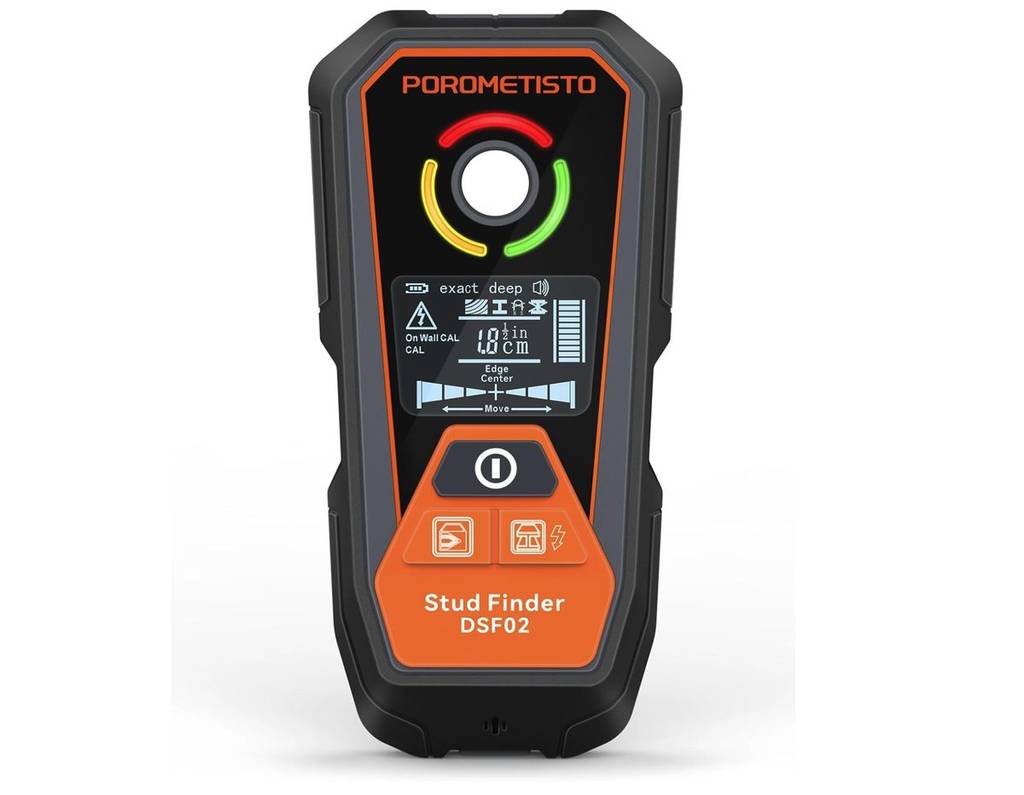
Stop drilling blind: The 53€ wall scanner that saved me from pipe disasters
The discovery was a lifesaver. I found a professional-grade 6-in-1 wall detector on Amazon for just 53 euros, down from 59. Think about the alternative. One slipped drill bit. One severed pipe. The repair bills for that would dwarf this tiny investment. This isn’t just a gadget. It’s insurance for your walls.
No more battery anxiety with the DSF01
Most detectors are a pain in the neck. You lose them halfway through a project because the batteries died. Not this one. The DSF01 wall scanner is fully rechargeable. It has a long-lasting battery and a clear LCD screen. You pick it up, it wakes up automatically. It’s always ready. No hunting for AA batteries when you’re two feet up a ladder.
Testing it in the real world
How the smart box finds wires and rebar instantly
The detection depth on this thing is scary good. It finds metal pipes up to 120mm deep. Copper up to 110mm. Live electrical wires up to 50mm. But the real magic is the dual intelligent calibration. It uses a color-coded optical guide to tell you exactly what you’re looking at.
Green means Ready.
Yellow means Edge.
Red means Target.
You don’t need to be an engineer. The tool tells you when you’re close.
Drilling into plasterboard without the fear
Even if you’ve never held a drill before, you can start here. Place the device on a flat surface. Wait for the message <-----Move-----> to appear on the bottom of the screen. That’s your cue to scan.
Here’s a pro tip: tap the two bottom buttons simultaneously. It disables the beep. You can work in silence. No annoying chirps interrupting your concentration.
The final verdict
What this tool kept out of my trash can
The DSF02 mode (part of the same lineup) pinpoints wooden studs with high precision. It tracks metal and copper too. The anxiety is gone. Those cold sweats before you drive a screw into the wall? Gone. The reliability is total. Every hole you drill is a safe hole.
How to get your money’s worth from day one
Keep it simple. The device needs tight contact with a flat surface. Bumpy textures or textured wallpaper will mess up the readings. If the data looks weird, recalibrate manually. Just a short or long press on the mode button resets it.
Getting this 6-in-1 wall detector isn’t about buying a toy. It’s about finishing your spring renovations without destroying your plumbing. Why risk a burst pipe when the technology can guide you so clearly?
The answer is simple. You don’t.