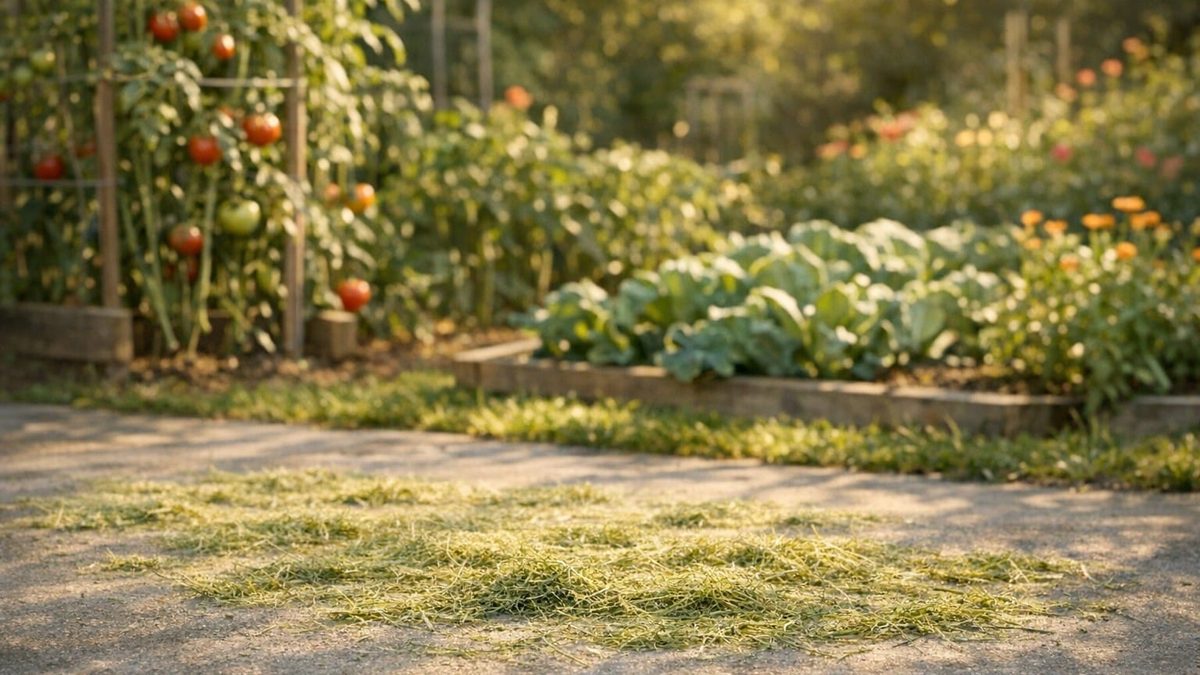
Leave grass clippings on the driveway for two days in the sun. Flip them over once or twice with a pitchfork. You aren’t being lazy. You are performing a specific technique that most gardeners mess up. The neighbor next door just figured out what many ignore: fresh grass piled thickly at the base of tomatoes or zucchini doesn’t feed the soil. It burns it.
Here is the reality check. Fresh grass is about 80% water. Pile it thick, and it ferments dangerously. Drying it out lets you use ten times more protective material without the risk. Dry clippings release nitrogen fast. They feed the soil better than standard mulch.
Why Fresh Grass Becomes a Problem
Fresh cut grass is mostly water. Lawn mower bags are full of it. That green stuff pulls moisture straight from the ground. Stack it in a deep layer, and oxygen vanishes in hours. The chemistry gets nasty. Thick, compacted wet grass enters anaerobic fermentation. That process generates intense heat. It can literally cook the roots of young plants. It stinks up the neighborhood with ammonia. It forms an impermeable crust that chokes the soil.
The crown of the vegetable plant takes the hit first. That fragile zone between the roots and the stem? It’s the first casualty. You think you are shielding the plant. You are actually slow-cooking it. If you have ever dug into a forgotten pile of fresh clippings, you know the feeling. The center is warm to the touch. Warm means fermentation has started.
To keep young plants alive, follow the strict rule: keep fresh grass to 1-2 centimeters thick. Ideally, dry it first. Two centimeters feels thin. It is. It won’t protect your soil during a July heatwave.
The Drying Step Everyone Skips
This is where the driveway comes in. Spread the clippings in a thin layer on a clear surface. Sun exposure is key. Let the excess water evaporate before rot sets in. The safest method is pre-drying. Lay the grass on a tarp or a sunny patch for one or two days. Turn it occasionally so it dries evenly. Once it loses most of its moisture and looks like hay, it’s safe to use.
That dried “hay” is light and airy. It looks nothing like the green sludge from your mower deck.
The benefit is not just safety. It is quantity. Dry grass allows for much thicker layers. You can apply 10-20 centimeters as mulch. Ten times more protective material from the same mowing run. On an average lawn, volume matters. 100 square meters of fallow land yields about 30 kg of clippings on the first cut. A 1,000 square meter lawn? That’s 300 kg. That is 240 liters of water equivalent. It is a small tank of nitrogen. Too often, it gets hauled to the dump instead of going to the vegetable garden.
What the Soil Actually Gains
The value of grass clippings lies in nitrogen. Nitrogen drives leaf growth. Chemically, clippings differ from other mulches. Their carbon-to-nitrogen ratio is 10 to 15. Compare that to dry hay (25-30) or wheat straw (120-150). That is ten times less carbon than straw.
Practically speaking, this means clippings release nitrogen fast. Straw takes months to break down. Clippings act as a quick-release fertilizer. They are a temporary but nutrient-dense mulch. They provide insulation, sure, but the feeding effect is immediate.
Some vegetables love this stuff. Lawns clippings are great for nutrient-hungry crops. Cabbage, spinach, cucumbers, and squash benefit directly from the released nitrogen. Avoid overdoing it on fruiting crops like tomatoes late in the season. Too much foliage hurts fruit production. You have seen it. Gardeners who pile on squash clippings too heavily end up with plants that are all leaf and no fruit.
The method has limits. Your neighbor probably knows this. Chemically treated grass has no place in the vegetable garden. Neither wet nor dry. If you must compost it, do it in small amounts. Don’t drown your compost pile with a single dump.
There is one funny detail few know. Once dry, the clippings become preferred bedding for small wildlife. Hedgehogs, salamanders, and toads love a cozy nest. A drying strip of grass can become a temporary shelter. You start by trying to save your tomatoes. You end up building a house for a toad. That is a bonus you didn’t plan for.
Sources: neozone.org | gazon.pagesjaunes.fr