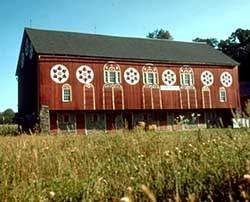
You drive through any rural area in America and you will see them. Red barns. They are the visual shorthand for farming, even though the color isn’t exactly what it used to be. The bright fire-engine red we see today is a modern invention. The original “barn red” was a burnt-orange hue. This shade came from European farmers who needed to protect their wood. They used a mixture of linseed oil, milk, and lime. The oil hardened quickly. It sealed the wood. It kept the structure standing.
The color came from what they added to the mix.
Wealthier farmers might add blood from a recent slaughter. The iron in the blood darkened as it dried, shifting from bright red to a deep, rusty orange. Other farmers used ferrous oxide. That is rust. Rust was cheap. It was everywhere on a farm. It also killed fungi. Mold and moss love moisture. They trap water in wood. That water rots the timber. Rust stopped that rot. It was a practical solution. The result was a protective, reddish coating.
It became fashionable. A red barn contrasted sharply with a white farmhouse. It looked good. It looked wealthy. It looked successful.
How Red Paint Took Over America
European settlers brought this tradition to the United States. They carried the idea of sealed wood and reddish tints across the ocean. By the mid to late 1800s, paint production changed. Chemical pigments became available. Red paint was the cheapest option. It was affordable for farmers who had little money. Red became the standard.
Why did red barns become so popular in America? The answer lies in cost. Red pigment was inexpensive. It was the budget choice. It lasted. It protected. It looked traditional.
Then whitewash became cheaper. White barns started to appear. The tradition of red didn’t die, but it split. Some barns stayed red. Others turned white. Today, barn colors vary. They depend on use. They depend on cost. They depend on what the owner wants.
Red paint was the most inexpensive to buy in the 19th century United States.
Why Do Barns Look Different Today?
The bright red you see now is a marketing shift. It’s not historically accurate. It’s a stylized version of the original burnt-orange. The protective qualities are still there, but the formula has changed. Modern paints use synthetic chemicals. They don’t need blood or rust. They don’t need linseed oil. They dry fast. They stick well. They look vibrant.
But the history remains. The color tells a story. It tells of European farmers protecting their timber. It tells of American settlers finding the cheapest option. It tells of a tradition that stuck because it worked.
If you are restoring a barn, you might consider the original mix. Linseed oil is still sold in home-improvement stores. It is a wood sealant. You can add rust. You can add pigment. You can replicate the old methods. Or you can buy modern paint. Either way, the barn will stand. The color might change. The purpose remains the same. Protection. Durability. Tradition.
The landscape is still speckled with these structures. They are iconic. They are practical. They are red. Or orange. Or white. It doesn’t matter. They are still there. Still standing. Still sealing the wood.