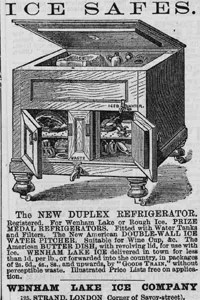
Things changed when the refrigerator arrived in the late 19th century. In the past, preventing food spoilage was a daily battle against bacteria and a waste of money. I buy things that I can eat before they go bad. It’s very simple. This is survival.
Now imagine turning it off.
A small but growing group in the “green” community is doing just that. They give up refrigerators to reduce their carbon footprint. That sounds intense. For most of us who rely on our fridge for daily meals, this seems almost impossible. But is it really harder than we think?
The math is stark. All devices consume power. Producing electricity produces greenhouse gases. A typical refrigerator bought after the year 2000 consumes about 450 kilowatt hours of electricity per year. Old model? They swallowed two or three times that amount.
This energy consumption is equivalent to approximately 660 pounds of carbon dioxide emissions per year. Let’s think about this number. This is equivalent to a car burning 35 gallons of gasoline.
To put things into perspective, driving a car 800 miles produces the same amount of carbon dioxide as refrigerating food for a year.
For some environmentally conscious households, these emissions are more important than the convenience of a refrigerator. It would be nearly impossible for people in most developed countries to completely stop cooling.
Let’s see how people live without a refrigerator. We will also consider ways to reduce cooling loads without completely removing the equipment from use.
Refrigerator option: warm green
First, we need to clear up a misunderstanding. Just because you’ve given up your fridge doesn’t mean you have to eat hot food. This means you need to rethink your storage.
Before the advent of electric compressors, traditional preservation methods existed for thousands of years. Salt curing. Drying. Fermenting. Root cellaring. These technologies rely on chemistry and the environment rather than electricity.
They work. They keep food safe. They just need more planning.
If you’re thinking about making fundamental changes, you need to understand how food safety works. Bacteria thrive in the “danger zone” between 40°F and 140°F. Refrigeration keeps food below 40°F. Without it, you have to remove moisture (drying), add preservatives (salt/sugar/vinegar) or adjust the ambient temperature (cellaring).
It’s not just about saving energy. It’s about repairing your relationship with food. You should shop seasonally. You are forced to eat what you can eat now.
Can you survive like this? For some, yes. For most people, a hybrid approach is needed. Next, consider these hybrid approaches. But first, you need to know what you’re actually storing.
Most households waste a large part of their refrigerator space on things that cannot fit in the refrigerator. Bananas. Tomatoes. Onions. Potatoes. These products spoil and taste bad in the cold. Removing it from the freezer frees up space for impact-resistant storage.
It starts with awareness. Then start with the pantry.
The Counter-Intuitive Truth About Your Condiments
We treat the refrigerator like a sacred object. When you enter an American or European kitchen, that humming white box becomes the focal point. It saves leftovers. Prevents dairy products from curdling. It keeps your spinach from turning into a pile of soggy, sad green slime. But what many people miss is that not everything needs cold air to survive.
Ketchup does not require a refrigerator. mustard? Same story. For years, you’ve kept these items in the cold out of habit rather than necessity. Great for the counter.
What about fruits and vegetables? If you plan to eat one apple or head of lettuce in the next 7 days, leave it out. Stay cool and dry. It will be more delicious. It will be a better texture. In fact, the refrigerator draws out moisture. It weakens things. But what if you wait more than a week? Then you can play Russian roulette with mold and mush.
Living Without the Hum
So what happens when you unplug the beast? We can’t let everything rot. These experiments were not done this way. People who ditch their main refrigerator usually have a backup plan.
Most don’t go zero-cool. They replaced the big box with a cooler and a small freezer. Some people freeze their water bottles in a mini-freezer and then move them to a larger cooler. It’s a hack. You don’t need to use main unit’s energy to get ice. You can also store meat. You can still keep spoilage of milk for 2 days.
If you live somewhere cold, you can put yogurt on the porch. It’s viable in winter. In summer? You need ice. Lots of it.
The Grocery Store Shift
This will change the way you shop. You can’t go to Costco and buy five-pound of chicken thighs. You can’t buy a gallon of milk that’s been in the back of the fridge for three weeks.
You should buy food that will expire within 48 hours.
If you buy a 3-pound bag of apples and don’t eat them all, the apples turn to dust. You have to limit yourself. Quarts instead of gallons. This is more than just an inconvenience. Very expensive. If you buy smaller quantities, you will usually pay more per unit. What do you do when you throw away spoiled food? That money is wasted.
The calculations will be difficult. Are the savings in energy bills enough to cover the rising grocery costs and food waste? It’s a calculation. A messy one.
Saving Electricity: Cool Green
The charm is always the same. green. Efficient. Low carbon footprint. But unpluging your fridge requires constant vigilance. This is not a lifestyle you set and forget. It’s a daily negotiation with your food supply.
Why giving up the refrigerator is a bad energy choice
Take into account that you can save a lot of electricity by unplugging the refrigerator. This is not true.
Most homeowners consider refrigerators to be energy wasters. It works 24/7. This logic seems reasonable. However, it’s actually light compared to the heavy hitters in your home.
Check the numbers for newer models. An electric furnace pulls 6,000 kilowatt-hours a year. Central air conditioning sits at 2,000. Even the clothes dryer burns through 765. A regular fridge? Only 450 kWh. It consumes less electricity than a washing machine (360 kWh).
So why would environmentally conscious people want to remove it entirely? They weren’t thinking clearly.
The trade-off between costs and benefits is rarely successful. You might save a few dollars on your utility bill. And you face a pile of rotten food. Wasted groceries cost more than the kilowatt-hours. Also, if you buy less food, go to the grocery store more often. More driving. More gas burned. More packaging waste.
Even if you switch to a small freezer, you still won’t win. Even units less than 6.4 cubic feet use more than 200 kWh per year. It simply replaces one device with another and does not remove the energy load.
How to reduce your cooling footprint
You don’t have to live as a pioneer. We just have to be smarter.
Replacing older units with Energy Star rated models is an obvious step. But habits are more important than hardware. These adjustments are free. They will lower your bill immediately.
- Clean the coil. Do this once a year. Dust and dirt make it difficult for the compressor to work.
- Test the door seal. Use a dollar bill. Close it in the door. If it slides out easily, the seal is loose. Cold air escapes.
- Plan before opening. Just stand there and stare. Heat comes in every time the door opens. Know what you want before you pull the handle.
- Keep it full. A full fridge holds cold better. When you open the door, there is a large amount of food available, thanks to which the temperature returns faster. Empty space means wasted energy.
The future of cooling: no moving parts
Technology is constantly developing. Let’s see what happens next.
British researchers are rethinking old models. Albert Einstein and Leo Szilard invented a refrigerator with no moving parts. Works with compressed gas. Zero electricity.
A group in Cambridge, Massachusetts is building something different. It uses thermoelectric materials instead of toxic CFCs. Powered by a diesel or biodiesel generator with solar panels.
These are not available in stores. They are prototypes. However, the direction is clear.
In 20 years, home refrigerators may be as environmentally friendly as picnic cooler. Until then, keep your coils clean. Check the seal. Do not unplug for the sake of the planet. You end up eating spoiled milk.