Renovating a property with mixed architectural styles often presents a unique challenge: how to respect the history of the original structure while modernizing later additions. For many homeowners, the solution lies in curated exterior cladding —a project that can dramatically improve kerb appeal without breaking the bank, provided it is planned and executed with precision.
This case study highlights a successful transformation of a 1970s bungalow extension attached to a traditional stone cottage. By replacing dated concrete replica stone with natural timber, the homeowners achieved a cohesive aesthetic that bridges the gap between old and new.
The Challenge: Bridging Architectural Divides
The property in question was a “hodge-podge” mix: a historic half-cottage paired with a single-storey 1970s extension that included an integrated garage. After three years of addressing critical infrastructure issues—such as rewiring, plumbing, and bathroom renovations—the focus shifted to aesthetic improvements.
The primary visual offender was the exterior of the 1970s extension, which had been clad in concrete stone replica. This material clashed severely with the natural stone of the original cottage and dated the property in a way that diminished its overall charm. While mid-century design has its merits, the previous cladding choice created a visual disconnect that needed resolution.
Strategic Planning: Navigating Conservation Rules
Before purchasing materials, the homeowners addressed the most critical hurdle: planning permission.
Located in a Conservation Area, the property did not benefit from standard “Permitted Development” rights, which typically allow minor external changes without formal approval. Therefore, any alteration to the building’s appearance required explicit consent from the local planning authority.
The strategy involved creating distinct visual zones for the three sections of the house:
1. The Cottage: Repointing the original stonework with lime.
2. The Pitched Roof Extension: Rendering with lime to match village aesthetics.
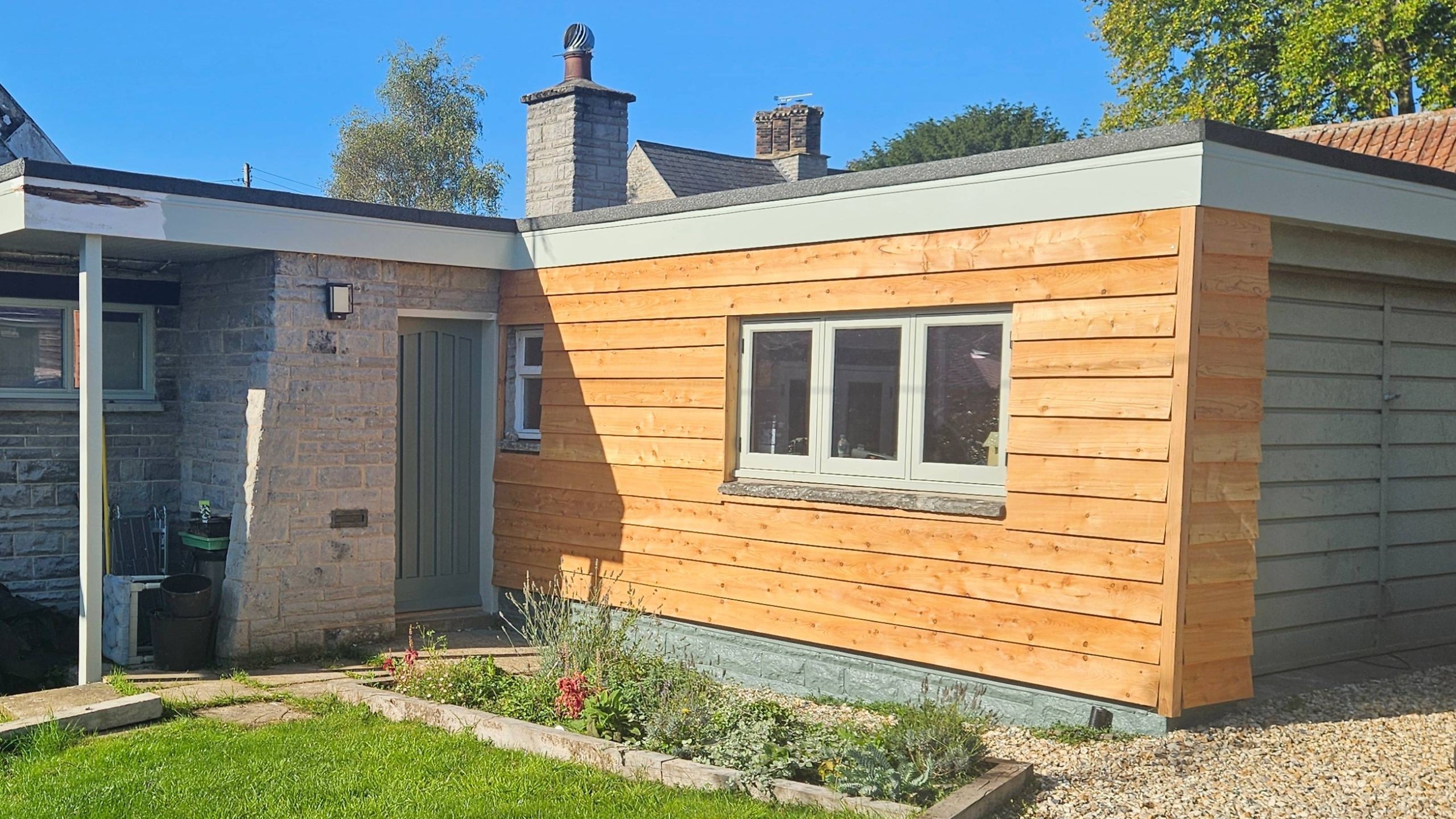
3. The Flat-Roof Extension (Garage): Recladding with timber.
This holistic approach ensured that the changes were sympathetic to the local character, resulting in approved planning permission with minimal delay.
Budget and Material Selection
Balancing cost with longevity is essential in exterior renovations. The homeowners opted for untreated larch, a durable softwood known for its natural resistance to decay.
- Material Cost: £445 (including delivery, battens, and corner pieces).
- Additional Fixings: £30 (stainless steel nails, cement screws, and rodent mesh).
- Labor: DIY (saving approximately £600–£800 compared to hiring a contractor at ~£200/day).
Key Tool Recommendations:
For DIYers undertaking similar projects, two tools proved invaluable:
* Mitre Saw: Essential for precise angle cuts (£89.99).
* Plunge/Track Saw: Crucial for long, straight cuts on large boards (£159.99).
Installation Process: A Step-by-Step Guide
The installation covered a 15m² area and took approximately three to four days to complete. The process followed these key steps:
1. Preparing the Substrate
The existing concrete stone surface was uneven, making it difficult to attach fixtures directly. The team installed vertical battens using corrosion-resistant masonry screws.
* Function: These battens provide a flat, square surface for the timber boards.
* Ventilation: Crucially, they create an air gap behind the cladding, preventing moisture buildup and mold during winter months.
2. Moisture Management
Since the garage wall was already watertight, a separate weatherproof membrane was not required. However, the team installed a rodent mesh along the bottom edge to prevent pests from nesting within the cladding cavity. This mesh is invisible once the boards are in place.
3. Fixing the Cladding
Using shiplap-style larch boards, the team fixed the timber from the bottom up using stainless steel nails.
* Pro Tip: Sourcing long horizontal planks that spanned the entire length of the garage eliminated the need for joins or cuts. This not only simplified installation but also resulted in a cleaner, more professional finish.
* Damp Proof Course (DPC): Cladding was stopped at the line of the DPC to prevent rot. The lower section of the wall was painted with dark green external masonry paint to visually recede, drawing the eye upward to the timber.
The Result: Patience Pays Off
The immediate visual result was initially concerning. Fresh larch has a distinct pinkish hue that can look unnatural against other materials. However, the homeowners trusted the natural weathering process.
After one year, the wood has begun to silver, losing its pink tint and developing a mature, grey-toned patina that complements the natural stone of the cottage perfectly.
“The weathering is toning those hues down nicely as the wood silvers with age.”
Conclusion
This project demonstrates that exterior cladding is a high-impact, budget-friendly renovation strategy, particularly for properties with mixed architectural styles. By prioritizing planning compliance, choosing durable materials like larch, and executing the work with attention to ventilation and detail, homeowners can unify their property’s aesthetic. The result is a modernized extension that respects the historic character of the original home, proving that thoughtful DIY can yield professional-grade results.