


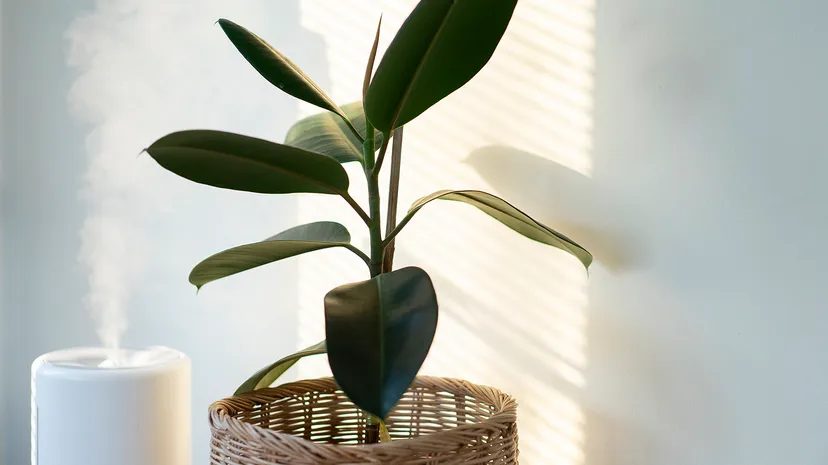
There is a reason why humidifiers are popular. They relieve sinus congestion. They prevent tropical plants from turning into fragile decorations. However, in order to understand what does a humidifier do, you have to understand the invisible enemy hiding in the living room, i.e. dry air.
In winter, the indoor air humidity can be very low. Even with the furnace is cranked, the air inside is probably drier than the Sahara. When there is a lack of moisture, the skin dries out. Mucous membranes may crack. It may feel colder than the thermostat shows.
Dry air doesn’t just affect you. It will also attacks your house. Wood absorbs moisture. It absorbs and releases moisture from the air. When the air is extremely dry in winter, the wood shrinks. The floors creak. Plasterboard cracks. Plaster separates.
Adding a humidifier isn’t just for convenience. It’s also about preservation. Having a little moisture in the air can help prevent your home from warping and shrinking. The creaking stops. The skin itches less.
Its operation is as follows.
Understanding relative humidity
Simply put, humidity is the amount of water vapor in the air. You know it when your mirror fogs up in a hot shower. Or when you go outside after a heavy rain. This means high humidity.
Low humidity means desert. This is the air you breathe in from your scuba tank. This is the air in your living room in January.
However, “relative humidity” is a term that affects comfort. Relative humidity measures the amount of moisture* in the air compared to the maximum moisture content at a given temperature.
Warm air contains more moisture than cold air. This is the key.
How the capacity of water changes with temperature
Air has its limits. A given amount of air can only hold a certain amount of water vapor before it becomes saturated. This limit changes with temperature.
One cubic meter of air can contain up to 18 grams of water at 20 degrees Celsius (68 degrees Fahrenheit).
If you raise the temperature to 25 degrees Celsius (77 degrees Fahrenheit), the same cubic meter holds 22 grams of water.
If the temperature is 25 degrees and there are 22 grams of water in the air, the relative humidity is 100%. It’s saturated. Nothing can dissolve into it.
If it contains 11 grams, the relative humidity is 50%.
Zero grams means zero moisture.
Heat index and your body
Relative humidity determines how hot or cold you feel. It plays a big role in the “heat index”.
Evaporation stops at 100% relative humidity. The air is full. It cannot absorb any more water.
The body cools down by sweating. Sweat evaporates from the skin and removes heat. If the air is dry, it evaporates quickly. It feels cool. Humid air slows down evaporation. It feels hot and sticky.
On the other hand, in winter the air is dry and the skin’s moisture is taken away. It feels colder than the actual temperature. That’s why 68 degrees feels cold in dry air, but comfortable in humid air.
The air in your home needs balance. If it’s too dry, your body loses water quickly. If it gets too wet, mold will grow. A humidifier can help you find a compromise.
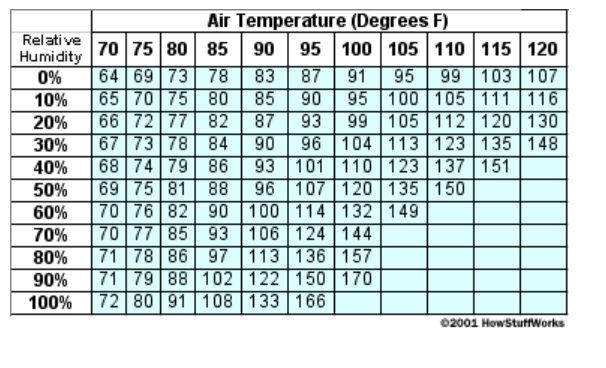

Sweat cools the body by evaporation. The process stops when the relative humidity reaches 100%. The reason you feel warmer than the thermometer shows is because your skin is moist. When turned inside out, sweat evaporates immediately when humidity is low. You may feel cold and even shiver, but your skin and throat will hurt.
Three effects of low humidity on people
It’s not just about convenience. Dry air attacks the body in three specific ways.
Dry anywhere
The skin and mucous membranes lose water. When I wake up, my lips are chapped. My skin starts to itch even before I get out of bed. A sore throat has become part of your morning routine. You are not alone in your dryness. Indoor plants die faster. Cracks occur in wooden furniture.
Static shock
Dry air is an insulator. Since the electrons have nowhere to go, they accumulate in the body. Touching the door handle gives you an electric shock. It’s annoying, unpredictable and generally unpopular.
Temperature illusion
Low humidity tricks the brain. A temperature of 70°F feels colder than it actually is. Summer is humid, hot and uncomfortable. In winter, the humidity is low and it feels colder. See details. At 70°F and only 10% humidity, the air feels like 65°F. 70% humidity makes the same room feel 5°F warmer.
You can raise the temperature of your home by 3 degrees just by adjusting the humidity.
How humidifiers improve indoor air quality
Heating the air costs money. Humidifiers are cheaper. An air humidifier is both a comfort device and an economic tool.
For health and comfort, the relative humidity target is 45%. At this level, the air feels neutral. Your lungs won’t dry out. The skin remains intact. Most families struggle to maintain this level naturally. The humidity often drops below 45% in winter. It can rise in summer. The goal is stability.
Winter humidity
Moisture is your enemy in winter. Cold air contains very little moisture. Heating the cold indoor air reduces the relative humidity even more.
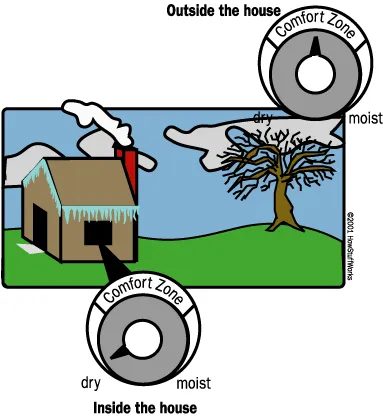

Why is the indoor air dry in winter?
It starts with physics. Rather, it is a simple mismatch between what the outside air can contain and what it contains when it enters a heated home.
You breathe in 1 cubic meter of air at 0 degrees Celsius (32 degrees Fahrenheit). At this temperature, it can hold up to 5 grams of water. Next, bring the same air into the room and set the heat to 25 degrees Celsius (77 degrees Fahrenheit). The ability to absorb moisture from the air increases to 22 grams. But the original amount is still only 5 grams.
result? The relative humidity is only 23%.
5 grams / 22 grams in air = 23% relative humidity
The situation only gets worse when the outside temperature drops. This is the basic reason why the air in heated buildings feels dry in winter. If the outside temperature remains below freezing, the relative humidity of the indoor air drops below 20%, unless you actively add moisture.
Inside the humidifier
Most people use evaporative humidifiers. This is the most common type and its principle of operation is almost too simple to be effective.
The main unit has a cold water tank. Water drips into the pool and is absorbed by the wicking filter. The fan then blows air through the wet filter.
As the air travels, some of the moisture evaporates. The higher the relative humidity of the room, the harder it is for more water to evaporate from the filter. The humidifier adjusts automatically. As humidity increases, the yield naturally decreases.
Some systems go a step further and connect directly to your home’s HVAC ducts. The duct system is equipped with a metal mesh. The water in the house’s pipes flows through this screen. When your furnace blows air, the air absorbs moisture and circulates it throughout your home.
Types of humidifiers
You can place a pan of water on the radiator or hang a damp towel near the heater. In theory it works. However, most homeowners use mechanical devices for consistent results. Here are four main technologies you can use.
Vaporizers
Evaporators, also known as warm mist humidifiers, boil water and release steam directly into the room. This is the simplest technique, which means it is usually the cheapest. Discount stores offer units for less than $10.
You can also add a medicated inhalants for cough relief. But simplicity comes with a trade-off.
Impellers
Impeller models use a rotating disc to spray water into the comb diffuser. Diffusers break the water into small droplets that remain in the air as a cool mist. This is one of the two main types of cool mist humidifier.
Ultrasonic humidifier
It uses a metal film that vibrates with ultrasonic frequencies to form water droplets. Think of it as a tweeter driver. The result is a quiet device that produces a cool mist. Although they are popular for their quiet operation, they carry some of the same risks as impeller models.
Wick system
This is the evaporative method explained earlier. Paper, cloth or foam wick absorbs water from the tank. The fan blows air over the wick, and the air absorbs moisture. Although it has a self-regulating feature and is generally safe for families with young children, the filter needs to be changed regularly.
Choose a humidifier
Choosing the right device depends on your priorities, including safety, noise, maintenance and energy costs.
Risk of burns
Steam vaporizers are dangerous for children. Boiling water or hot steam can cause serious burns. They also have the highest energy costs because they constantly heat water. On the positive side, this technique does not cause microbiological problems because the boiling process kills bacteria.
Bacteria spread
The impeller and ultrasonic design work in cold water. This saves energy, but can become a breeding ground for bacteria if the water stands for too long. These devices spray water directly into the air. If the water is standing, it means that bacteria is splashing into your home.
Regular cleaning is not negotiable. Fill the tank with fresh water if it has not been used for a while. Some high-end ultrasonic models have antimicrobial features such as UV light to reduce this risk.
Spreading Dust
Minerals in the water supply are another problem. The impeller and the ultrasonic humidifier atomize the water. This means releasing these minerals into the air as a fine white dust. If there is hard water in your area, you will see it settling on surfaces.
Although the EPA does not issue specific health warnings about airborne minerals, it recommends using low-mineral water, such as distilled water, to prevent this dust. Many ultrasonic models have a demineralization cartridge that filters out minerals before the water is atomized.
Preset Features
Look for a device with a built-in hygrometer. Monitor the relative humidity and turn the unit on and off to maintain preset levels. This prevents the air from becoming too humid, which can promote mold growth.
Portability
Decide whether you want local treatment or cover your entire home. Small portable units are suitable for private rooms. Integrated systems connect to the furnace to regulate humidity throughout your home and are more efficient, but require professional installation.
Tracking Humidity Levels
You can’t manage what you don’t measure. An inexpensive hygrometer can show the relative humidity of your home. You might be surprised how low it really is. Most sources recommend keeping indoor humidity between 30-50%. Below this level, it can cause skin dryness and respiratory tract irritation. If it is higher than this, mold is likely to grow.
It’s a delicate balance. If the humidity is too low, your home will feels harsh. Too much can lead to decay. Finding the middle ground requires some monitoring and a lot of maintenance.


