You spent hours curating the wine list. You aimed the track lighting to flatter that abstract piece you bought on credit. You even decanted the Cabernet like a pro. Yet, the second the first guest walks through the door, they drift. Past the living room. Past the art. Straight into the kitchen.
It’s annoying. It’s also inevitable.
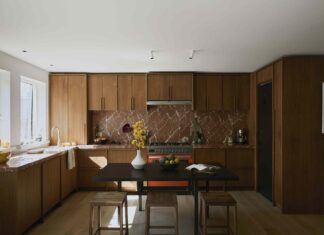
The kitchen is the gravitational center of any gathering. It’s warm. It smells good. It’s where the social magnetism lives. If you’re hosting, you aren’t just preparing food; you’re preparing for the realization that your guests will ignore your perfect dining setup in favor of the island.
This makes the kitchen one of the most valuable rooms in the house. It’s also one of the most expensive to fix up. Back in 2006, the average remodel cost Americans over $54,000. But the return on investment? Roughly 91 cents for every dollar spent. That kind of payback explains why homeowners pour money into their culinary headquarters.
When it comes to updating the space, few changes make as immediate an impact as new countertops. You see more of this surface area than any other fixture, excluding floors and walls. Your choices define the room’s entire aesthetic.
The Usual Suspects
The traditional options are well-trodden paths. You likely already know the roster:
- Granite: Durable, natural, heavy.
- Laminate: Affordable, vast color selection, prone to scratching.
- Butcher Block: Warm, wood grain, requires heavy maintenance.
- Marble: Stunning, porous, stains easily.
- Slate: Rustic, uneven, can crack.
- Stainless Steel: Industrial, hygienic, shows every fingerprint.
- Concrete: Customizable, heavy, prone to cracking if not sealed perfectly.
- Soapstone: Soft, develops a patina, feels oily.
- Limestone: Elegant, soft, requires careful sealing.
Each has its place. Each has its flaws. But there is another option that has quietly taken over the market since the early 1990s. It’s not natural stone. It’s engineered. And it’s changing the game.
The Rise of Quartz
Engineered quartz is now everywhere. Why? Because it solves the problems of natural stone while keeping the look.
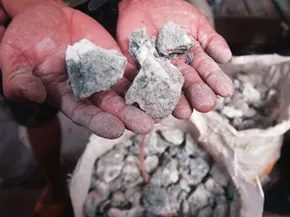
It’s made from about 93% ground quartz mixed with polymer resins and pigments. That high quartz content makes it incredibly hard. Scratch-resistant. Stain-resistant. It doesn’t need sealing like marble or granite. You can leave the wine out. You can chop garlic directly on it. It holds up.
And it’s not just about durability. It’s green. The manufacturing process often incorporates recycled materials. You get a consistent, uniform look that natural stone rarely offers. Want a solid black slab? You can have it. Rose quartz? Sure. Tan? Brown? They make them all.
Brands like Silestone and Zodiaq have become household names. They offer a wide range of colors and patterns that mimic marble or mimic nothing at all, leaning into solid, bold statements.
Is It Worth the Investment?
The upfront cost is higher than laminate. It might match or slightly exceed granite. But when you factor in the lack of maintenance—no sealing, no special cleaners—it pays for itself over time.
If you’re planning a renovation, or just a refresh, look beyond the natural stones. Quartz isn’t just a material. It’s a practical compromise between beauty and brute strength.
But before you run to the supplier, consider this:
The brand strategy behind the quartz stone
Silestone and Zodiaq may sound like a wrestling team, but they are actually two of the largest brands of quartz countertops. Silestone aims to make its name synonymous with the entire category in the same way that Formica dominates laminate products. What is their strategy? A Super Bowl commercial in 2005 cost $2.5 million. Although the company’s products are expensive, they are currently sold in 3,500 stores. The return on invested capital is clear.
石英台面是由什么制成的?
这些表面由 93% 的石英粉与制造商所谓的“增强材料”混合而成。 该混合物包含树脂粘合剂,可与石英一起硬化,形成完美的表面。 这里的树脂是一种高粘度的合成化合物——本质上是一种粘稠的粘稠物质。 虽然树脂也天然存在于植物和树木中,但合成树脂是将这种石头粘合在一起的。 其结果是一种无孔饰面,不同于当今任何其他台面材料。
Color options and textures
A big draw for homeowners is the colors produced by Silestone and Zodiaq. If you prefer the traditional dark gray, that is also readily available. Do you want candy apple red or 1960s orange? The smooth quartz surface makes this possible. Silestone also offers a “leathery” textured surface that mimics the appearance of animal skin and adds tactile dimension to the material.
Quartz countertop costs and installation price
The price of quartz is comparable to another popular granite. However, Silestone and Zodiaq require a qualified professional to install the worktop. This means the price is all-inclusive. Installation costs are expected to be between $42 and $66 per square foot.
For an average kitchen with about 25 square feet of counter space, the mid-priced $50 option will cost about $1,250 in addition to installation costs. Once you’ve chosen a color, you can choose from a variety of edge profiles, including crown molding and rounded edges. You are not limited to solid colors either. The high-end options have marble and granite patterns.
石英表面在哪里使用
石英非常适合厨房,但它也适用于桌面、楼梯、地板和壁炉罩。 该材料易于保持清洁且非常耐用。 这使其成为浴室瓷砖的有吸引力的替代品。
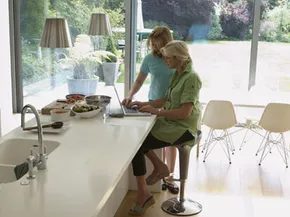
为什么石英石比花岗岩更适合低维护厨房
几十年来,花岗岩一直是厨房的默认选择。 看起来不错。 在许多市场上,它的价格与石英差不多。 那么为什么要切换呢? 答案在于材料的科学性。
石英的矿物硬度莫氏硬度为 7。 花岗岩比较软。 这个数字很重要。 这意味着石英比天然石材更能抵抗划痕和碎裂。 您可以直接在上面切蔬菜,而不必担心刀具变钝或损坏表面。
还有污渍的问题。 花岗岩是多孔的。 它喝油、酒和咖啡。 石英被设计为无孔的。 液体位于顶部。 你把它们擦掉。 不渗漏。 无染色。
这给我们带来了维护。 花岗岩需要密封。 每年。 或者每两年一次。 如果忘记了,就会弄脏。 石英从来不需要密封。 它随时可用。 你安装它。 你做饭。 你活着。 这就是低维护的定义。
Health and Safety: Microban Factor
Bacteria prefer porous surfaces. Mold loves them too. Quartz changes this dynamic. Its dense structure prevents microbial colonization.
Some brands go a step further. For example, Silestone contains Microban in the mixture of resin and quartz. This is not a surface coating. It is part of the material. Microban prevents the growth of bacteria. Food poisoning cannot be cured. I still need to wipe the counters. However, the surface remains clean longer. Hygiene management becomes easier.
This hygiene classification is more than just marketing. These products are certified by the National Sanitation Foundation. The same applies to GREENGUARD’s environmental research institute. They test emissions. The quartz surface test breaks down. Very low.
氡气和室内空气质量
这是大多数房主忽视的一个事实。 花岗岩会释放氡气。 氡气是一种无色、无味的气体。 它来自地球。 它被困在人造材料中。 美国环保署警告说,室内污染可能比室外空气严重100倍。
石英则不存在这个问题。 测试显示几乎没有氡气排放。 这使其成为厨房和浴室等封闭空间的更安全选择。 它的“绿色”不仅仅在于耐用。 它可以改善您的室内空气质量。
Is Quartz right for you?
The durability is obvious. Better hygiene. The safety information also supports this. HGTV has chosen Quartz as a dream home for the third year in a row. These are test kitchens for the average buyer. If it’s enough for a gift for the whole country, it’s also enough for a renovation.
Finding samples is easy. Visit local manufacturers. Contact us for more information on quartz options. Compare with granite. Feel the weight. Ask about guarantees.
The market is changing. Granite is still popular. However, quartz offers a cleaner, safer and easier to control surface. Your kitchen will thank you. When you find that you don’t need to reseal the counter, you may need to reseal the back as well.
Such freedom is worth exploring. Especially if you value your time as much as your work level.