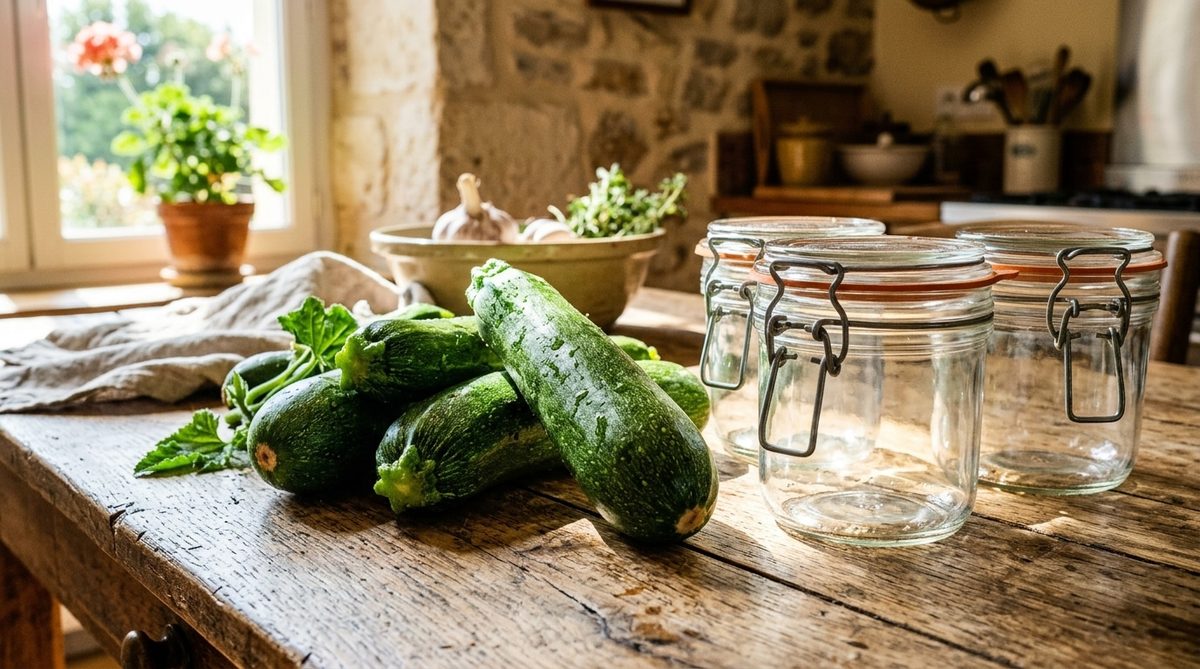
July poses a very special problem for the home gardener. It’s not about lack of food. That’s a huge amount of green. Zucchini vines seem to produce overnight and fill baskets until you wonder if there really is a limit to the amount of vegetables you can eat. Freezing is an easy answer. It is also a mistake for this particular vegetable.
Zucchini consists mainly of water. Put the raw slices in the freezer and they will turn into mush as they thaw. The composition dissolves completely. You lose the substance that makes farming worthwhile. So you have leftovers and a freezer full of mud.
There is a better way. Traditional preservation methods can preserve the summer flavor without compromising the texture. These techniques require little energy and do not contain chemical preservatives. They ensure that the pantry is full of homemade quality long after the frost.
Sterilization: Classic canning method
Canning is the most reliable way to keep zucchini strong and safe for months. You need clean glass jars. Regular mason jars work perfectly. You can find them at any garden center or hardware store. For safety reasons, sterilization is not negotiable.
Wash the zucchini thoroughly. Remove the ends. Cut the flesh into even cubes. The important thing here is uniformity, so that the heat penetrates evenly. Pack the cubes tightly in sterilized jars.
Cover the zucchini with boiling water. Leave a little space at the top. Close the jars immediately. Process in a boiling water bath for the time specified in your trusted storage guide. The heat creates a vacuum that keeps bacteria at bay.
“This method captures the summer heat without constant energy costs in the following months.”
The result is a solid, long-lasting zucchini. It keeps its shape in soups or stews. Once the jars are sealed, you can preserve the authentic taste of the garden without any effort.
Pickling for Crunch and Acid
If you want some kick, try pickling. This method is similar to making cornichons, but with zucchini. It adds a sharp, tangy contrast to winter dishes.
Cut the zucchini into slices or strips. Pack them in jars. Make brine from vinegar, water, salt and spices of your choice. Mustard seeds, dill and peppercorns add depth. Pour hot brine over the vegetables. Close the jars.
The acid changes the structure slightly, but maintains a pleasant crispness. It transforms the mild taste of zucchini into something tangy and complex. This is an excellent alternative to buying expensive pickled vegetables from the store. It adds a gourmet touch to appetizers or salads.
Drying to save space
Space is often the biggest problem in home storage. Drying solves this problem. They remove the water content completely. Zucchini shrinks to a fraction of its original size.
Cut the zucchini into thin slices. Spread the slices on dehydrator trays or baking sheets. Dry them on low heat until they are leathery or crispy. This process takes time, but requires very little active effort.
Dried zucchini chips are a healthy snack. Rehydrated slices work well in pasta sauces or baked dishes. They hardly take up any space in your cupboards. This method is ideal if you have a large crop and little shelf space.
Get the most out of your storage
These methods turn seasonal oversupply into a long-term resource. When winter comes and the garden rests, your jars will still hold the taste of July. For a quick soup, you can open a jar of canned cubes. You can sprinkle pickled rounds on the charcuterie board. toss dried slices by adding dried slices to the stew.
This approach reduces food waste. It reduces the number of shopping trips. It connects you to the cycle of the seasons in a practical way. You don’t have to be a professional chef to do this. All you need are clean jars, a little time and a willingness to process the harvest while it is fresh.
The garden will give you gifts in July. You don’t have to let it spoil.