The kitchen is the heart of the home. The cooktop is its altar. Especially in winter, the stew bubbles in the pot and boils for hours. However, after holidays or daily cooking, the shiny black surface shows signs of aging. Small scratches will appear. It is best seen in the strong light of the cooker hood. Your kitchen can look neglected, even if it has just been cleaned.
Many people thought the glass was permanently damaged. They think they have to live with that ugly scar. It doesn’t have to be this way. No need for expensive chemicals. There is no need to change the device. A simple approach using basic products can reduce surface irregularities. You can restore the shine your glass-ceramic stove deserves.
Understand the damage
To solve the problem, you need to understand its root cause. If you don’t, you’ll end up repeating the same mistakes. Glass ceramics are strong and durable. It looks good. However, glass surfaces are sensitive to mechanical impact.
Repeated rubbing can cause scratches. You may not need to use a metal spatula. Often it is grains of salt or sugar trapped under the pan. When you move the pan, the particles act like sandpaper. Scratches are visible immediately.
Abrasive sponges are equally dangerous. Is it the green side of a regular scrub brush? Small scratches form a network. This dims the overall look of the glass.
Before remedial measures, the surface must be thoroughly cleaned. Remove all fat. Eliminate burnt residues. Requires a clean cooking surface for efficient polishing. If you skip this step, you’ll end up rubbing dirt deep into microscopic scratches.
Secret ingredients: Bicarbonate and toothpaste
You may already have this solution in your pantry. And the bathroom cabinet too. Duo is simple. Effective. Low cost.
The main ingredient is baking soda (sodium bicarbonate). It is a mild abrasive. You can polish the glass without damaging it. When used with gel-free toothpaste, it becomes a mild paste. The mild abrasives in the toothpaste can help fill in and smooth out minor irregularities.
Here’s how to use this DIY Stove Scratch Repair method.
- **Clean it first. ** Remove all loose debris with a damp cloth. Make sure the surface is cool to the touch.
- **Make the paste. ** Mix baking soda with a small amount of water or toothpaste. It should have a thick consistency.
- **Apply lightly. ** Apply the paste to the scarred area. Use a circular motion. Use light pressure. Do not rub too hard. Let the mild scrubbing effect work.
- **Leave it as it is. ** Let the mixture stand for a few minutes. In this way, the ingredients can more easily penetrate the unevenness of the surface.
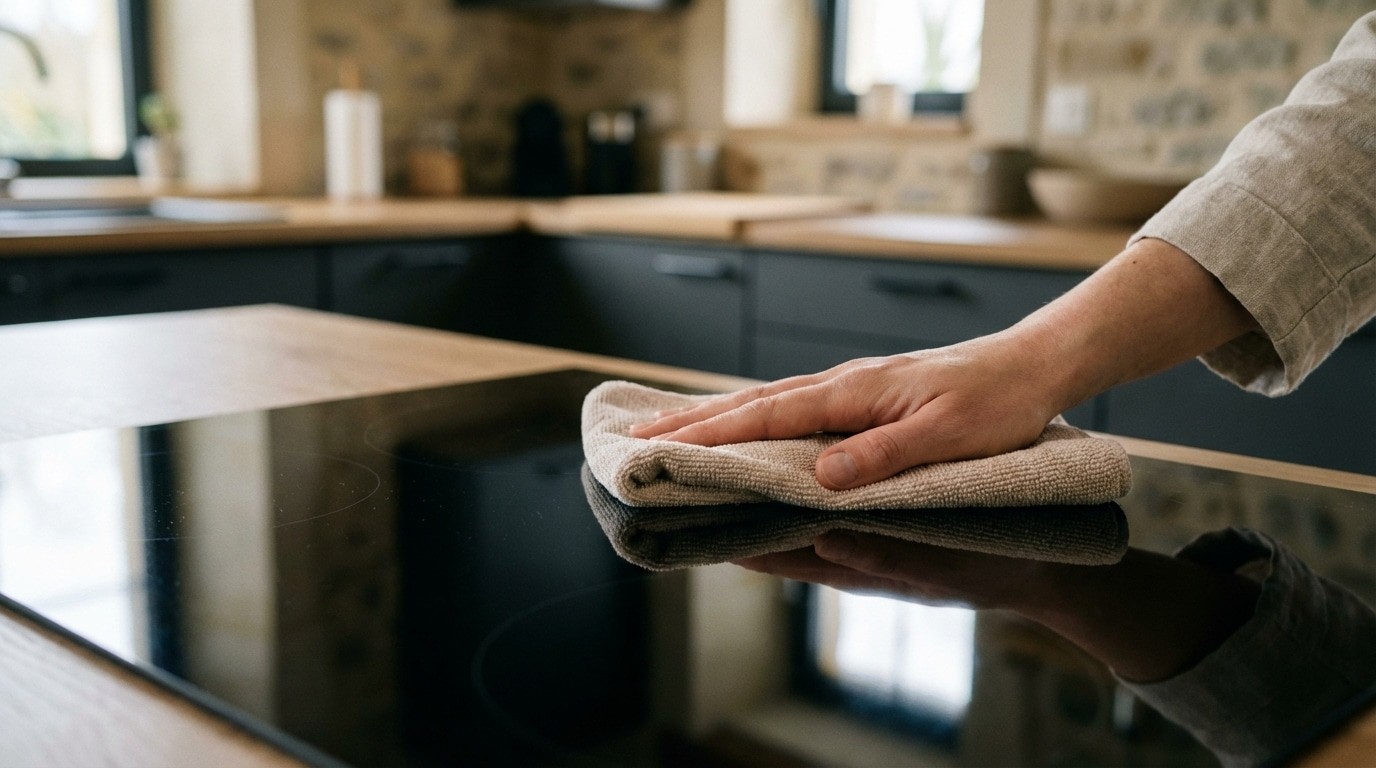
- ** Brush and wipe. **Use a clean, soft cloth to polish the area. Then wipe off the residue.
This process does not fill deep cracks. It targets superficial marks. Restores shine. As a result, the surface looks almost new. No special tools required. All you need is patience and common household items.
The shine returns. The scars fade into the background. Your kitchen will look brand new again. But this is only the first step. There is still a lot of work to be done in the maintenance of glass surfaces. The final sealing and protection steps are described in the next section. Until then, keep your pots moving gently. watch for those stray grains of
Why toothpaste and baking soda are more effective than industrial detergents
Avoid strong industrial creams. These are expensive and often too aggressive for sensitive surfaces. The answer may be in the bathroom or kitchen cabinets. A material with very fine grinding power is needed. Scratched edges must be polished without affecting the surrounding healthy glass. Baking soda is good for that. It becomes an environmentally friendly and strong paste.
Add benefits by mixing with white toothpaste. It is an opaque white paste. It is not a colored gel. Or try using clay stone. These natural alternatives are affordable. They respect the environment. However, traces of wear and tear can be destroyed. Here’s what you’ll need to gather for this home renovation:
- Food grade or household baking soda
- 1 tube of regular white toothpaste
- Clay stone (also called silverstone)
- Clean and soft microfiber cloth
- Lukewarm water
The choice of ingredients is not arbitrary. Gentle mechanical movements can literally “remove” visual defects. Using strong chemicals can leave white marks. May irritate the respiratory tract. This homemade mixture is safe for health and glass surfaces. Clay stone is recommended especially for small scratches. Forms a slightly waterproof protective film. This approach focuses on caution and patience rather than chemical attacks.
Light brushing: Precise movements to remove stains
Clean and dry the surface. Prepare the paste. Mix a small amount of baking soda with water or use toothpaste directly. Application requires delicacy. Do not rub too hard. There is a risk that the condition may worsen or develop a dull halo. Be patient and perform small circular movements regularly.
Apply a hazelnut-sized amount of the product to the scratched area. Use a soft or cotton cloth. Perform concentric rotations. Use light, even pressure. This process can take several minutes per region. Repetition is what polishes the glass microscopically. Check your progress regularly. Wipe the area with a damp cloth and judge if you should continue polishing. This approach requires a mental pause. Don’t rush. Care for the material.
“Three-star” Result: Mirror-like shine restored
After working, rinse thoroughly with clean water to remove rubbing residues and wipe dry with a dry microfiber cloth. The changes have become clear. Surface scratches disappear. Deeper ones are visibly reduced. Its relief merges with the restored shine of the glass. It seems that the glass ceramic stove has been reborn. The light reflects into your kitchen as if it were your first day.
To maintain this brilliance in the long term, adopt new daily reflexes. Raise the pots and pans. Do not drag them from one burner to another. Wipe up spills immediately. This prevents future strong scratches. This simple precaution, combined with the occasional claystone polish, will guarantees exceptional longevity for your cooking appliance. Turn cleaning into a real home care routine. A sparkling clean kitchen makes cooking even more enjoyable. Especially if maintenance is done naturally.
Extend the life of everyday devices by revitalizing them with simple, environmentally friendly solutions. We make substantial savings. It’s a small victory against obsolescence. You will feel the personal satisfaction of seeing your kitchen look brand new without much effort. Any other devices that deserve the natural rejuvenation treatment this weekend?