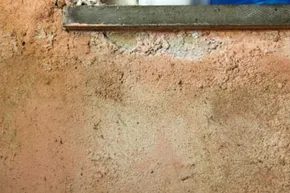
Michelangelo was not having a good week. In 1508, he was busy painting the Sistine Chapel ceiling, only to discover an unsightly white film ruining parts of his masterpiece. He wrote that he was in a “great quandary.” The enemy wasn’t his brush. It was efflorescence.
This powdery deposit plagues masonry walls and concrete slabs today just as much as it did the Renaissance master. If you have dark stained concrete floors or a brick patio, you know how annoying this discoloration can be. It is hard to miss on dark surfaces.
The Science Behind White Stains on Masonry
The word comes from a term meaning “flowering.” But let’s be clear: this is not a garden. Efflorescence affects almost any porous masonry. Brick. Stucco. Concrete slabs. Patio stones.
The cause is simple chemistry. Soluble salts live inside concrete, brick, and mortar. When water moves through porous openings in these materials, it picks up those salts. The water travels to the surface. As it dries, the water escapes. The salt stays behind.
It creates a solid residue.
The color varies. Usually, it is white or gray. Sometimes it is yellow or green, depending on the salt type. The texture changes too. It might look like chalk. A light scum. Crystals. “Whiskers” that look like fuzz in a small spot. Or it could cover a huge area.
Is It Dangerous?
For the most part, efflorescence is an aesthetic issue. It looks bad. It feels rough. But the structure is usually fine.
There are exceptions. In rare cases, the buildup of salts can weaken the masonry. It can cause spalling. That is when the surface chips or blisters off.
Persistent efflorescence is often a signal. It points to a moisture problem. And if you have chronic moisture, you might get mold. So while the white powder itself might not collapse your wall, the water causing it could be a bigger headache.
The Challenge of Removal
This is why homeowners and contractors feel stuck. The stains appear without warning. They are difficult to cure completely. You might scrub the surface, but if the water source isn’t fixed, the salt returns.
Michelangelo had to chip away damaged sections of his painting and start over. You don’t need to go that extreme. But you do need to understand how it forms to fix it.
The next step is understanding the three specific conditions required for efflorescence to happen. Once you identify those triggers, you can start solving the problem.